Showing posts with label Reading Lists. Show all posts

Thursday, December 15, 2011

Reading List: Mental Illness in Fiction

Welcome to this week's installment of our newest feature here at The Blue Bookcase: Reading Lists. Every week one of us (or a guest blogger) will post on one of his or her favorite topics and provide a list of books he or she is familiar with on that topic. At the end of each post we will invite you to throw out any suggestions of books, fiction or non-fiction, that you have read or know about on that topic and we will add them to the list on that post.
These lists are not comprehensive by any means, but may be useful in helping you find your next read.

[This has turned out to be not that weekly of a thing, but it's still fun! You can find all the Reading Lists in the tab above titled as such.]

This week, Christina is compiling a list called: Mental Illness in Fiction.
Picasso: Blue Nude

When I was about fifteen I bought an old psychology textbook from a library book sale on a whim. The book was published in like 1990, and I'm sure a lot of the information inside was already long-since outdated when I read it in the late 90's. But that didn't make the chapter on mental disorders any less intriguing to me. I was simultaneously fascinated and terrified by the symptoms of psychosis, personality disorders, mania and depression. And I will forever be scarred by the cruelty described in the section on the history of mental health institutions and treatments.

But even more startling and memorable were the artwork samples included in the text and the excerpts of interviews with people suffering from various disorders. I read that chapter again and again, and thus began my interest in the experience of mental illness.

I've read some memoirs that deal with mental health issues (Prozac Nation, Autobiography of a Schizophrenic Girl, When Rabbit Howls, An Unquiet Mind, Girl Interrupted) and they are powerful. There's nothing like a first-hand account. But at the moment I'm more interested in mental illness as an aspect of character development; I don't come across this as often in my reading. So that's why I'm choosing to limit this list to fiction. I can't wait to get your recommendations! Here we go.

**EDIT: I just want to clarify that in writing this post I was absolutely not motivated by a desire to present mental illness as entertainment. Literature should be a venue for empathy, not exploitation.


The Marriage Plot - Jeffrey Eugenides
Bet you didn't see this one coming! Yeah, I'm kind of obsessed with this book. Here's my review. One of the main characters, Leonard, has bipolar disorder (or, as it was known in the early '80's when this book is set, manic-depression). Eugenides really beautifully shows how Leonard relates to his illness and how the illness effects those around him.


Ahab's Wife by Sena Jeter Naslund
Though I thought it was kind of a cop-out when the author suddenly switched to his point of view for a chapter, I loved Kit. His break with reality and the earlier foreshadowing of his mental instability were especially interesting within the historical framework of this novel. I felt the suffering he felt, and I loved the way 19th century New Englander townspeople responded to him. Here's my review.


A Fan's Notes by Frederic Exley
Ok, so this one is just barely fiction. The narrator is a depressive alcoholic who spends time in and out of psychiatric institutions. There's a really great review of this one over at BookSlut. A fictional book about the author (called Exley) also has some mental health issues going on.


The Bell Jar by Sylvia Plath
How could any discussion of mental health and literature be complete without Sylvia Plath? This is one of my favorite books, and the best book about depression I have ever read. Read it and weep.


One Flew Over the Cuckoo's Nest by Ken Kesey
Another classic. It's been ages since I read it so I don't even remember which disorders are represented, but I appreciated the inherent commentary on institutionalization and treatments that were popular in the 1950's.


*Edit* 1/5/2012 I just remembered two others: Jane Eyre and Hamlet.


Ah... I know I'm forgetting some good ones! I'll add your recommendations (and your reviews, if you link 'em) below.


Your Recommendations:
"The Yellow Wallpaper" (short story) by Charlotte Perkins Gilman - recommended by Connie of The Blue Bookcase
Miss Entropia and the Adam Bomb by George Rabasa - recommended by Melody at Fingers and Prose (title linked to her review)
Poppy Shakespeare by Clare Allan - recommended by Laura at Devouring Texts
The Perks of Being a Wallflower by Stephen Chbosky - recommended by Laura at Devouring Texts (title linked to her review)
Wide Sargasso Sea by Jean Rhys - recommended by Meg at The Terrible Desire
Fight Club
by Chuck Palahniuk - recommended by Meg at The Terrible Desire
I Never Promised You a Rose Garden by Joanne Greenburg - recommended by Sherry at Semicolon
Lisa, Bright and Dark by John Neufeld - recommended by Sherry at Semicolon
Sights Unseen by Kaye Gibbons - recommended by Sherry at Semicolon (title linked to her review)
The Dogs of Babel by Carolyn Parkhurst - recommended by Christine-Chioma of The Blue Bookcase

Do you consider yourself particularly well-read on a certain topic? Or maybe you find yourself drawn to books about specific people, places, or things? We would love to have you write a Reading List post for us! If you are interested please email us at thebluebookcase@gmail.com.

Thursday, October 13, 2011

Reading List: World War One

Welcome to this week's installment of our newest feature here at The Blue Bookcase: Reading Lists. Every week one of us (or a guest blogger) will post on one of his or her favorite topics and provide a list of books he or she is familiar with on that topic. At the end of each post we will invite you to throw out any suggestions of books, fiction or non-fiction, that you have read or know about on that topic and we will add them to the list on that post.

These lists are not comprehensive by any means, but may be useful in helping you find your next read. Enjoy!

This week, Meagan is compiling a list of books about World War One
.


I've been interested in WWI ever since I was a young girl living in England. The way The Great War was so completely woven into the fabric of British culture was fascinating to me as an American ex-pat as it seems to be barely a thread in American history.  When I was in college I spent a semester back in London and took a class called "The Great War and Modernism" which involved a study of the various cultural and social elements of the war and its aftermath and included several visits to various battlefields and memorials throughout Europe which only made my interest all the more intense. I returned to England yet again for Grad School and yet again WWI and the aftermath of the interwar years claimed much of my attention. I'd be hard pressed to name another event or time period that was so drastically formative to the years--even decades--that followed, and that fact continues to draw me in to examine facet after facet of WWI.


My interest in WWI literature is more focused on the experience of war rather than straightforward military histories so while I have read a lot about the various battles and campaigns in detail, I'm only including one general survey of the war that I found particularly helpful in gaining a general sense of events. The rest of the list is a pretty random sampling of some of my favorite reads on the subject. The encompass poetry, memoirs, studies, facts, and fictions. Many were written during the war or shortly thereafter, but there are several with much more recent publication dates which only goes to show just how strong the pull to understand this tumultuous time period still is.


I can't wait to hear your suggestions!


My List
The First World War - John Keegan
"The First World War created the modern world. A conflict of unprecedented ferocity, it abruptly ended the relative peace and prosperity of the Victorian era, unleashing such demons of the twentieth century as mechanized warfare and mass death. It also helped to usher in the ideas that have shaped our times—modernism in the arts, new approaches to psychology and medicine, radical thoughts about economics and society—and in so doing shattered the faith in rationalism and liberalism that had prevailed in Europe since the Enlightenment. With The First World War, John Keegan, one of our most eminent military historians, fulfills a lifelong ambition to write the definitive account of the Great War for our generation." (Goodreads)

Remembering War
 - Jay Winter

"This is a masterful volume on remembrance and war in the twentieth century. Jay Winter locates the fascination with the subject of memory within a long-term trajectory that focuses on the Great War. Images, languages, and practices that appeared during and after the two world wars focused on the need to acknowledge the victims of war and shaped the ways in which future conflicts were imagined and remembered. At the core of the “memory boom” is an array of collective meditations on war and the victims of war, Winter says." (Goodreads)


A Testament of Youth - Vera Brittain
"Much of what we know and feel about the First World War we owe to Vera Brittain’s elegiac yet unsparing book, which set a standard for memoirists from Martha Gellhorn to Lillian Hellman. Abandoning her studies at Oxford in 1915 to enlist as a nurse in the armed services, Brittain served in London, in Malta, and on the Western Front. By war’s end she had lost virtually everyone she loved. Testament of Youth is both a record of what she lived through and an elegy for a vanished generation. Hailed by the Times Literary Supplement as a book that helped “both form and define the mood of its time,” it speaks to any generation that has been irrevocably changed by war." (Goodreads)


Good-bye To All That - Robert Graves
"The quintessential memoir of the generation of Englishmen who suffered in World War I is among the bitterest autobiographies ever written. Robert Graves's stripped-to-the-bone prose seethes with contempt for his class, his country, his military superiors, and the civilians who mindlessly cheered the carnage from the safety of home. His portrait of the stupidity & petty cruelties endemic in England's elite schools is almost as scathing as his depiction of trench warfare. Nothing could equal Graves's bone-chilling litany of meaningless death, horrific encounters with gruesomely decaying corpses & even more appalling confrontations with the callousness & arrogance of the military command." (Goodreads)


All Quiet On The Western Front - Erich Remarque
"This 1929 novel served as Remarque's attempt to confront and ultimately rid himself of the graphic and haunting memories of his time serving in World War I. A novel with autobiographical overtones, "All Quiet on the Western Front" traces the evolution of one man's powerful antiwar sentiments. " (Goodreads)

 A Farewell to Arms - Ernest Hemingway
"In 1918 Ernest Hemingway went to war, to the 'war to end all wars'. He volunteered for ambulance service in Italy, was wounded and twice decorated. Out of his experiences came A Farewell to Arms. Hemingway's description of war is unforgettable. He recreates the fear, the comradeship, the courage of his young American volunteer and the men and women he meets in Italy with total conviction. But A Farewell to Arms is not only a novel of war. In it Hemingway has also created a love story of immense drama and uncompromising passion. " (Goodreads)


The Wordsworth Book of First World War Poetry - VariousThe First World War was one of seemingly endless and unremitting waste and sacrifice. "Who will remember, passing through this Gate, The unheroic Dead who fed the guns? "was Siegfried Sassoon's anguished cry for those whose sacrifice seemed futile. Yet eighty years later it is because of Sassoon and his fellow poets - Owen, Rosenberg, Sorley and many others - that we do remember. This new anthology will serve as an introduction to the poetry of that great conflict, and the inclusion of a number of rarely anthologised poets, many from the ranks, as well as anonymous poems and songs, serves to bring a quality of freshness to the selection." (Goodreads)


Rilla of Ingleside - L.M. Montgomery
"Anne's children were almost grown up, except for pretty, high-spirited Rilla. No one could resist her bright hazel eyes and dazzling smile. Rilla, almost fifteen, can't think any further ahead than going to her very first dance at the Four Winds lighthouse and getting her first kiss from handsome Kenneth Ford. But undreamed-of challenges await the irrepressible Rilla when the world of Ingleside becomes endangered by a far-off war. Her brothers go off to fight, and Rilla brings home an orphaned newborn in a soup tureen. She is swept into a drama that tests her courage and leaves her changed forever." (Goodreads)


Birdsong
 - Sebastian Faulks

"The book's hero, a 20-year-old Englishman named Stephen Wraysford, finds his true love on a trip to Amiens in 1910. Unfortunately, she's already married; the wife of a wealthy textile baron. Wrayford convinces her to leave a life of passionless comfort to be at his side, but things do not turn out according to plan. Wraysford is haunted by this doomed affair, and carries it with him into the trenches of World War I. Birdsong derives most of its power from its descriptions of mud and blood, and Wraysford's attempt to retain a scrap of humanity while surrounded by it." (Goodreads)
War Horse - Michael Morpurgo
"Joey is a warhorse, but he wasn't always. Once, he was a farm horse and a gentle boy named Albert was his master. Then World War I came storming through and everything changed. Albert's father sells Joey to the army where the beautiful, red-bay horse is trained to charge the enemy, drag heavy artillery, and carry wounded soldiers not much older than Albert off of battlefields. Amongst the clamoring of guns and slogging through the cold mud, Joey wonders if the war will ever end. And if it does, will he ever find Albert again?" (Goodreads)


 Maisie Dobbs - Jaqueline Winspear
"Maisie Dobbs isn't just any young housemaid. Through her own natural intelligence--and the patronage of her benevolent employers--she works her way into college at Cambridge. When World War I breaks out, Maisie goes to the front as a nurse. It is there that she learns that coincidences are meaningful and the truth elusive. After the War, Maisie sets up on her own as a private investigator. But her very first assignment, seemingly an ordinary infidelity case, soon reveals a much deeper, darker web of secrets, which will force Maisie to revisit the horrors of the Great War and the love she left behind." (Goodreads)


Your Recommendations:
Tell me in the comments. And please provide links to your own reviews!


Do you consider yourself particularly well-read on a certain topic? Or maybe you find yourself drawn to books about specific people, places, or things? We would love to have you write a Reading List post for us! If you are interested please email us at thebluebookcase@gmail.com.

Thursday, September 29, 2011

Reading List: Contemporary Jewish Life and Culture

Welcome to this week's installment of our newest feature here at The Blue Bookcase: Reading Lists. Every week one of us (or a guest blogger) will post on one of his or her favorite topics and provide a list of books he or she is familiar with on that topic. At the end of each post we will invite you to throw out any suggestions of books, fiction or non-fiction, that you have read or know about on that topic and we will add them to the list on that post.
These lists are not comprehensive by any means, but may be useful in helping you find your next read. Enjoy!

This week, Christina is compiling a list of books about Contemporary Jewish Life and Culture.

This week's reading list post happens to fall on the first day of Rosh Hashanah, so I thought Judaism might be an appropriate topic for our Reading List.

I've been interested in Judaism for the past few years, ever since attending a Reform Shabbat service with a friend. I love learning about the holidays and traditions, and Hebrew and Yiddish. I think I'm a little jealous of my Jewish friends' connection to an ancient shared history.

Since Rosh Hashanah is a happy, forward-facing holiday, I'd like to focus on nowadays Jewish life rather than, say, biblical Judaism (The Red Tent) or the holocaust (The Pianist). This will help narrow things down a bit, and we can save those topics for another list. BUT let's include books that connect the past with the present (Everything is Illuminated). Sound good? Ok!

My List

The Instructions - Adam Levin
"Beginning with a chance encounter with the beautiful Eliza June Watermark and ending, four days and 900 pages later, with the Events of November 17, this is the story of Gurion Maccabee, age ten: a lover, a fighter, a scholar, and a truly spectacular talker. Ejected from three Jewish day-schools for acts of violence and messianic tendencies, Gurion ends up in the Cage, a special lockdown program for the most hopeless cases of Aptakisic Junior High. Separated from his scholarly followers, Gurion becomes a leader of a very different sort, with righteous aims building to a revolution of troubling intensity." (goodreads)


The Last Jewish Virgin - Janice Eidus
"Lilith Zeremba, a young woman rebelling against her intellectually complex, feminist Jewish mother, is The Last Jewish Virgin. In this playful and provocative, sensual and suspenseful novel, Janice Eidus merges the timeless, romantic myth of the vampire with contemporary life in volatile New York City —and beyond. Determined to make her own way —on her own terms —as a successful Jewish woman in the world of fashion, Lilith finds herself in a place where mythology and sexuality collide. She meets two men to whom she is drawn in ways that feel dangerous and yet inevitable: the much older, wildly mercurial and mesmerizing Baron Rock, and Colin Abel, a young, radiant artist determined to make the world a better place, one socially progressive painting at a time." (goodreads)

Born to Kvetch: Yiddish Language and Culture in All of Its Moods - Michael Wex
(yeah, this one is mainly historical. But I still think it works in this category because it ties that history into contemporary Jewish life.)
"Yiddish doesn't need apologies. Once dismissed as a derivative vernacular language, the lingua franca of millions of Jews has recently gained just recognition for its richness and strikingly apt idioms, phrases, and metaphors. Michael Wex's Born to Kvetch combines the lively accessibility of Leo Rosten's The New Joys of Yiddish with the insightfulness of a serious inquiry into Yiddish culture. Anyone who loves wordplay or enjoys Jewish humor will appreciate this book." (goodreads)

Everything Is Illuminated - Jonathan Safran Foer
"With only a yellowing photograph in hand, a young man - also named Jonathan Safran Foer - sets out to find the woman who might or might not have saved his grandfather from the Nazis. Accompanied by an old man haunted by memories of the war, an amorous dog named Sammy Davis, Junior, Junior, and the unforgettable Alex, a young Ukrainian translator who speaks in a sublimely butchered English, Jonathan is led on a quixotic journey over a devastated landscape and into an unexpected past. As their adventure unfolds, Jonathan imagines the history of his grandfather's village, conjuring a magical fable of startling symmetries that unite generations across time. Lit by passion, fear, guilt, memory, and hope, the characters in Everything Is Illuminated mine the black holes of history. As the search moves back in time, the fantastical history moves forward, until reality collides with fiction in a heart-stopping scene of extraordinary power." (goodreads)

The History of Love - Nicole Krauss
"Leo Gursky is trying to survive a little bit longer, tapping his radiator each evening to let his upstairs neighbor know he's still alive, drawing attention to himself at the milk counter of Starbucks. But life wasn't always like this: sixty years ago, in the Polish village where he was born, Leo fell in love and wrote a book. And although he doesn't know it, that book also survived: it crossed oceans and generations, and changed lives. Fourteen-year-old Alma was named after a character in that book. She has her hands full keeping track of her little brother Bird (who thinks he might be the Messiah) and taking copious notes in her book, How to Survive in the Wild Volume Three. But when a mysterious letter arrives in the mail she undertakes an adventure to find her namesake and save her family." (goodreads)


Your Recommendations:
Tell me in the comments. And please provide links to your own reviews!
Chaim Potok's novels - recommended by Connie at The Blue Bookcase
Kosher Nation by Sue Fishkoff - recommended by Suzanne at Bibliosue
The Ladies Auxilliary by Tova Mirvis - recommended by Emily (Christina's mom)
Tevye the Dairyman and Motl the Cantor's Son by Sholem Aleichem - recommended by Emma at Words and Peace

Do you consider yourself particularly well-read on a certain topic? Or maybe you find yourself drawn to books about specific people, places, or things? We would love to have you write a Reading List post for us! If you are interested please email us at thebluebookcase@gmail.com.

Thursday, September 8, 2011

Reading Lists: The African-American Experience

Welcome to this week's installment of our newest feature here at The Blue Bookcase:Reading Lists. Every week either one of us or a guest blogger will post on one of his or her favorite topics and provide a list of books he or she is familiar with on that topic. At the end of each post we will invite you to throw out any suggestions of books, fiction or non-fiction, that you have read or know about on that topic and we will add them to the list on that post.
These lists are not comprehensive by any means, but may be useful in helping you find your next read. Enjoy!

This week, Connie compiles a list of books on the African-American experience.

This picture has nothing to do with anything,
but everyone else has included one, so
I felt the pressure
While I love this new feature of The Blue Bookcase's, I've had a difficult time coming up with a topic I seem to read a lot about. I read more by author, I suppose, than topic, and plus my interests are so vast, so I tend to read one book on this, one book on that, dip my toes into topics without jumping all the way in.

However, luckily for me, I have realized that I tend to read a lot about African-American experiences. You could blame it on me currently living in the South in a county that is predominantly black, but to be honest, the interest budded before I moved here. However you analyze it, the fact remains that I have read a lot of books on it. Here are a few of the better books I've read on this topic. I chose to focus on novels and memoirs that I have read and am most familiar with.

The Skin I'm In by Sharon G. Flake -- This is a quick, young adult read told from the perspective of a young black girl, Maleeka, attempting to fit in in an inner-city middle school and to be comfortable in her dark skin. Though this is short and simply written, it is incredibly powerful. It's one I return to every couple of years.


To Kill a Mockingbird by Harper Lee -- Who hasn't read and been moved by this book? There's something about a story of inhumanity told through the eyes of an innocent child that makes it all the more moving.


Native Son by Richard Wright -- I read this book in high school, and I remember being so disgusted and so fascinated by it I had to force my way through it, and yet I also couldn't put it down. Wright is more of a blunt, confrontational racial issues writer that can be off-putting, but I can't help but love his style. The book tells the sometimes graphic, not-so-pretty story of Bigger Thomas, a 20-year-old black man living in a Chicago ghetto in the 1930s, who embraces the racial anger inside of him and becomes a "brute Negro." Let me tell you, it is a fascinating-- not to mention shocking-- perspective. I distinctly remember reading a part in which a woman's head is cut off (this happens in one part, not throughout, the novel) and the description of her hair swirling in her blood. Right after that, I went to lunch, where I found I could not eat my spaghetti.

Friday, August 26, 2011

Reading Lists: Australian Fiction

Welcome to this week's installment of our newest feature here at The Blue Bookcase: Reading Lists. Every week either one of us or a guest blogger will post on one of his or her favorite topics and provide a list of books he or she is familiar with on that topic. At the end of each post we will invite you to throw out any suggestions of books, fiction or non-fiction, that you have read or know about on that topic and we will add them to the list on that post.

These lists are not comprehensive by any means, but may be useful in helping you find your next read. Enjoy!

This week, Lucia is compiling a list on Australian Fiction.

The questions of what Australian is and what it means to be Australian are asked multiple times a day. I consider myself Australian because I, along with my parents, was born here, I speak English as my first language, my passport says so, and I've never called anywhere else home. On the other hand, I, like an extreme number of others in Australia, have European ancestry. But what about Indigenous Australians or our connection with Asia? Tricky questions, no doubt. I have only very recently begun to actively pursue the reading of Aus fiction, because up until recently I didn't know what it felt like to be homesick for my comparatively quiet state capital . So, in terms of Australian literature and fiction, I've decided to go with books written by Australians which include an opinion about something significant to Australia.

Possum Magic by Mem Fox. Probably the most famous Australian children's book, this is the story of Hush who has been turned invisible by Grandma Poss. Their quest to make Hush visible again takes them all around Australia, discovering icons in Aussie food. “Once upon a time, but not very long ago, deep in the Australian bush, there lived two possums. Their names were Hush and Grandma Poss. Grandma Poss made bush magic…”

The Boat by Nam Le. Le is a Vietnamese author who migrated to Australia. The Boat is a collection of the most beautiful short stories, with the title story addressing one of the biggest issues in Australia today: boat people. One of my favorite stories was Waiting For Elise, about an ill and aging painter, mourning the loss of his lover and the daughter he doesn't know. Somehow, impossibly, the voice of the story is unbiased towards the situation of the narrating character. I believe that this reflects the title of the story, in that the central character is waiting as opposed to actually doing, and he knows this. I think the reader can sympathise with this because at the heart of the story is a commonly felt fear. Read the rest of my review here.

Looking for Alibrandi by Melina Marchetta. As I've mentioned, many people (including myself) come from a European background, and this young adult novel deals very realistically and often hilariously with this. The story is a wonderful twist; Josie Alibrandi is caught between a gaggle of gossiping Italians and the backdrop of Aus culture.


People of the Book by Geraldine Brooks. I love love this book, although it's hardly set in Australia (and I think I've gushed about it on several posts before, though not actually written a review). Brooks is Australian, though, and she is brilliant. The references to Aus come up like jewels in the plot. An ancient Jewish prayer book, supplies the core of this novel. When an Australian restorer is asked to work on the book after it is found in broken Sarajevo for the first time since World War II, her discoveries form the stems to the different segments which compile Brooks' text. Capturing diverse societies and covering several centuries, Brooks expertly draws together the pieces and people who became part of the book. The way in which she moves through the centuries and countries is evident in the colloquialisms and style of prose. Brooks' observations contributing to this are impressive; her use of modern day Australian language to everything from conversational tones of the Inquisition, to that of ancient African slaves. Her diversity is astounding.

And I hope to read so much more classic Australian fiction soon!


Your Suggestions:
(Let us know in the comments and we'll add them to the list!)
The White Earth
by Andrew McGahan (recommended by Beachreader)
Jasper Jones by Craig Silvey (recommended by Ellie and mummazappa)
(YA) Abhorsen Trilogy by Garth Nix and Children's Illustrators Robert Ingpen and Shaun Tan, and YA writers Markus Zusak and P.L. Travers (recommended by Befabian)
Sorry by Gail Jones (recommended by L)
Breath by Tim Winton (recommended by mummazappa)
Red Queen by Honey Brown (recommended by mummazappa)
How It Feels by Brendan Cowell (recommended by mummazappa)
Anything by Kirsty Eager (recommended by mummazappa)
I for Isobel by Amy Witting (recommended by Christina)
The Tomorrow Series by John Marsden (recommended by SarahSparrow)
Rhubarb by Craig Silvey (recommended by BookLoverBookReviews)
Wanting by Richard Flanagan (recommended by BookLoverBookReviews)
The Forgotten Garden by Kate Morton (recommended by BookLoverBookReviews)
The Chicken Thief by Fiona Leonard (recommended by BookLoverBookReviews)
The Book Thief by Markus Zusak (recommended by Becky at Page Turners)
Gould's Book of Fish by Richard Flanagan (recommended by Becky at Page Turners)
My Brother Jack by George Johnson (recommended by Becky at Page Turners)
Swords and Crowns and Rings by Ruth Park (recommended by Becky at Page Turners)
The Households Guide to Dying by Debra Adelaide (recommended by Becky at Page Turners)
Picnic at Hanging Rock by Joan Lindsay (recommended by Becky at Page Turners)
Ransom and An Imaginary Life, both by David Malouf (recommended by Susan at Reading World)
And the Ass Saw the Angel and The Death of Bunny Munro, both by Nick Cave (recommended by ParrishLantern)

Do you consider yourself particularly well-read on a certain topic? Or maybe you find yourself drawn to books about specific people, places, or things? We would love to have you write a Reading List post for us! If you are interested please email us at thebluebookcase@gmail.com.

Thursday, August 18, 2011

Reading Lists: Adventure Books

Welcome to this week's installment of our newest feature here at The Blue Bookcase: Reading Lists. Every week either one of us or a guest blogger will post on one of his or her favorite topics and provide a list of books he or she is familiar with on that topic. At the end of each post we will invite you to throw out any suggestions of books, fiction or non-fiction, that you have read or know about on that topic and we will add them to the list on that post.

These lists are not comprehensive by any means, but may be useful in helping you find your next read. Enjoy!

This week, we are lucky to have guest blogger Rob Curry compile a list for us of Adventure Books.


Rob at the Grand Canyon
 Who doesn’t love a good adventure? For the last couple years I’ve gone with a couple friends and my Dad and hiked the Grand Canyon. We filled up our backpacks with water and some food and set off walking down into one of the largest canyons on earth. We only brought enough supplies for one day – so there was no stopping and spending the night if we got tired . We had to make it out. It was tough, but the sense of accomplishment was more than worth it. (By the way the National Park Service strongly advises against attempting this!)

For me there is a big thrill that comes with conquering something Mother Nature puts in your path. For the record, I’ve never done anything really dangerous – but I love reading about people who have! It doesn’t matter where they’re headed as long as there is danger and a challenge involved.

This is not a complete list of the best adventure stories. Instead, I tired to pick books that have a sample of different types of adventure. I hope you enjoy them and maybe feel inspired to have an adventure of your own.

My List:

The Last Voyage of Columbus – by Martin Dugard
Christopher Columbus's fourth voyage was his final, least-known, and arguably most exciting expedition. The extended 1502-4 trip took him to what are now the Dominican Republic, Honduras, Nicaragua, Costa Rica, Panama, and Jamaica and exposed him and his men to deadly storms, attacks, mutiny, shipwreck, and terrible deprivation. (Goodreads)

The Lost City of Z: A Tale of Deadly Obsession in the Amazon - David Grann
A grand mystery reaching back centuries. A sensational disappearance that made headlines around the world. A quest for truth that leads to death, madness or disappearance for those who seek to solve it. The Lost City of Z is a blockbuster adventure narrative about what lies beneath the impenetrable jungle canopy of the Amazon. (Goodreads)
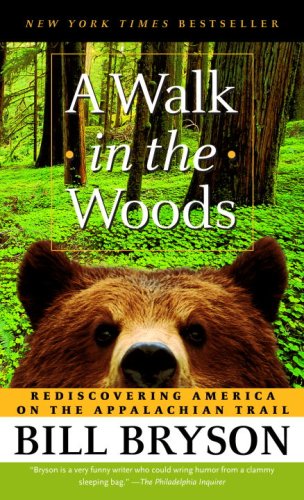
A Walk in the Woods- by Bill Bryson
In order to rediscover America by, as he puts it, "going out into an America that most people scarcely know is there," he set out to walk, in the company of Stephen Katz, his college roommate and sometime nemesis, the length of the Appalachian Trail. His account of that adventure is at once hilarious, inspiring, and even educational. (Goodreads)

The Wave: In Pursuit of the Rogues, Freaks, and Giants of the Ocean - by Susan Casey
For centuries, mariners have spun tales of gargantuan waves, 100-feet high or taller. Until recently scientists dis¬missed these stories. But in the past few decades, as a startling number of ships vanished and new evidence has emerged, oceanographers realized something scary was brewing in the planet’s water. As scientists scramble to understand this phenomenon, others view the giant waves as the ultimate challenge. These are extreme surfers who fly around the world trying to ride the ocean’s most destructive monsters. The pioneer of extreme surfing is the legendary Laird Hamilton, who, with a group of friends in Hawaii, figured out how to board suicidally large waves of 70 and 80 feet. Casey follows this unique tribe of peo¬ple as they seek to conquer the holy grail of their sport, a 100¬ foot wave (Goodreads)

Born to Run: A Hidden Tribe, Superathletes, and the Greatest Race the World has Never Seen - by Christopher McDougall
Born to Run is an epic adventure that began with one simple question: Why does my foot hurt? In search of an answer, Christopher McDougall sets off to find a tribe of the world’s greatest distance runners and learn their secrets, and in the process shows us that everything we thought we knew about running is wrong. With the help of Caballo Blanco, a mysterious loner who lives among the tribe, the author was able not only to uncover the secrets of the Tarahumara but also to find his own inner ultra-athlete, as he trained for the challenge of a lifetime: a fifty-mile race through the heart of Tarahumara country pitting the tribe against an odd band of Americans, including a star ultramarathoner, a beautiful young surfer, and a barefoot wonder. (Goodreads)

What are your favorite adventure books, fiction or non-fiction?

Your Suggestions:

From Seth @ Free Listens:
-The 39 Steps: The granddaddy of all man-on-the-run adventure books like The Bourne Identity, this short novel follows Richard Hannay across the English countryside as he tries to escape the police for a murder he didn't commit and expose a international conspiracy.
-The Hound of the Baskervilles. Probably the most famous and greatest of the Sherlock Holmes adventures.
-The Count of Monte Cristo Despite its massive length, this is an action packed revenge thriller.
-King Solomon's Mines This lost civilization novel is set in Africa in the Victorian Age, but it's less racist than you might assume. The main character, Alan Quartermain, is a wonderful scoundrel.

Into Thin Air by Jon Krakauer (Wendy from CaribousMom)
Into the Wild by Jon Krakauer (Laura from The Scarlet Letter)
Winterdance by Gary Paulsen (Wendy from CaribousMom)
Treasure Island by Robert Louise Stevenson (Allie from A Literary Odyssey)
180 Degrees South (Christine from Bookishly Boisterous)
A River of Doubt by Candice Millard (Belle from BookBelle)
Night Mail by Antoine de Saint Exupery (Stu from Winstonsdad)
Skeletons on the Zahara by Dean King (Christina from The Blue Bookcase)

Wednesday, August 10, 2011

Reading Lists: Medical Narratives

Welcome to this week's installment of our newest feature here at The Blue Bookcase: Reading Lists. Every week either one of us or a guest blogger will post on one of his or her favorite topics and provide a list of books he or she is familiar with on that topic. At the end of each post we will invite you to throw out any suggestions of books, fiction or non-fiction, that you have read or know about on that topic and we will add them to the list on that post.
These lists are not comprehensive by any means, but may be useful in helping you find your next read. Enjoy!

This week, Christina is compiling a list of Medical Narratives.

This jacket looks like a lab coat. That's why I bought it.
When I was in sixth grade, I had the honor of dissecting a mink. Yep, that's right, our classroom was full of eleven-year-old kids holding scalpels and standing over dead cat-like creatures. We had a bunch of fans whirring the whole time to ease the stench of death and formaldehyde. One kid threw up. Another fainted. The mental picture, looking back, is kinda Lynchian and I have no idea who thought this activity would be age appropriate. But I loved it! I loved being the tough girl who wasn't afraid of gross stuff. I loved looking for the different organs and seeing what was going on inside that little furry body. It was the first time I thought I might want to be a doctor.

Medical school was my long-term plan right up into my late teens. But then I got into animal rights and was pretty horrified at how much my childhood self had enjoyed violating that poor little animal. And somewhere along the line I decided (wrongly) that I wasn't very good at science, and then music became a huge part of my life, and then I got married and had a family. Long story short: I never became a doctor. But I still LOVE to learn about the human body, pathology, and medical ethics. So here's my list of Medical Narratives, and I can't wait to add your recommendations!
[Oh, and check it out! Columbia has a graduate program for Narrative Medicine! Wicked!]

My List (hyperlinked titles lead to my reviews either here or on goodreads.)

Complications - Atul Gawande
In gripping accounts of true cases, surgeon Atul Gawande explores the power and the limits of medicine, offering an unflinching view from the scalpel’s edge. Complications lays bare a science not in its idealized form but as it actually is—uncertain, perplexing, and profoundly human. (Goodreads)

The Spirit Catches You and You Fall Down - Anne Fadiman
On the most basic level, the book tells the story of [a Hmong] family's second youngest and favored daughter,
Lia Lee, who is diagnosed with severe epilepsy, and the culture conflict that obstructs her treatment. Through miscommunications about medical dosages and parental refusal to give certain medicines due to mistrust and misunderstandings, and the inability of the doctors to have more empathy toward the traditional Hmong lifestyle or try to learn more about the Hmong culture, Lia's condition worsens. The dichotomy between the Hmong's perceived spiritual factors and the Americans' perceived scientific factors comprises the overall theme of the book. (wikipedia)

The Man Who Mistook His Wife for a Hat - Oliver Sacks
In his most extraordinary book, "one of the great clinical writers of the 20th century" (The New York Times) recounts the case histories of patients lost in the bizarre, apparently inescapable world of neurological disorders. Oliver Sacks's The Man Who Mistook His Wife for a Hat tells the stories of individuals afflicted with fantastic perceptual and intellectual aberrations: patients who have lost their memories and with them the greater part of their pasts; who are no longer able to recognize people and common objects; who are stricken with violent tics and grimaces or who shout involuntary obscenities; whose limbs have become alien; who have been dismissed as retarded yet are gifted with uncanny artistic or mathematical talents. (goodreads)

Stiff: The Curious Lives of Human Cadavers - Mary RoachStiff is an oddly compelling, often hilarious exploration of the strange lives of our bodies postmortem. For two thousand years, cadavers—some willingly, some unwittingly—have been involved in science's boldest strides and weirdest undertakings. They've tested France's first guillotines, ridden the NASA Space Shuttle, been crucified in a Parisian laboratory to test the authenticity of the Shroud of Turin, and helped solve the mystery of TWA Flight 800. For every new surgical procedure, from heart transplants to gender reassignment surgery, cadavers have been there alongside surgeons, making history in their quiet way. (Goodreads)

Lying: A Metaphorical Memoir - Lauren Slater
Lying chronicles the doctors, the tests, the seizures, the family embarrassments, even as it explores a sensitive child's illness as both metaphor and a means of attention-getting—a human being's susceptibility to malady, and to storytelling as an act of healing and as part of the quest for love. This mesmerizing memoir openly questions the reliability of memoir itself, the trickiness of the mind in perceiving reality, the slippery nature of illness and diagnosis—the shifting perceptions and images of who we are and what, for God's sake, is the matter with us. (goodreads)

Every Patient Tells A Story - Lisa Sanders
A healthy young man suddenly loses his memory–making him unable to remember the events of each passing hour. Two patients diagnosed with Lyme disease improve after antibiotic treatment–only to have their symptoms mysteriously return. A young woman lies dying in the ICU–bleeding, jaundiced, incoherent–and none of her doctors know what is killing her. In Every Patient Tells a Story, Dr. Lisa Sanders takes us bedside to witness the process of solving these and other diagnostic dilemmas, providing a firsthand account of the expertise and intuition that lead a doctor to make the right diagnosis. (goodreads)

White Coat - Ellen Lerner Rothman
White Coat is Dr. Ellen Lerner Rothman's vivid account of her four years at Harvard Medical School. Describing the grueling hours and emotional hurdles she underwent to earn the degree of M.D., Dr. Rothman tells the story of one woman's transformation from a terrified first-year medical studen into a confident, competent doctor. (goodreads)

How Doctors Think - Jerome Groopman
Besides his accessible, jargon-free writing, what endears Dr. Jerome Groopman to legions of readers is his refreshing candor about the flaws and foibles of his own profession. Now the distinguished physician and bestselling author tackles a subject of great sensitivity to physicians and great importance to patients: errors in medical judgment that lead to misdiagnoses. Based on interviews, case histories, and the author's experience on both sides of the examination table, the book explains the role of first impressions, linear thinking, time constraints, and snap judgments in the diagnostic process and reveals how patients can engage doctors in dialogue that will improve communication and reduce the risk of error. Honest, revealing, and absolutely invaluable, How Doctors Think is a book that just might save your life. (goodreads)

Another Day in the Frontal Lobe - Katrina Firlik
Katrina Firlik is a neurosurgeon, one of only two hundred or so women among the alpha males who dominate this high-pressure, high-prestige medical specialty. She is also a superbly gifted writer–witty, insightful, at once deeply humane and refreshingly wry. In Another Day in the Frontal Lobe, Dr. Firlik draws on this rare combination to create a neurosurgeon’s Kitchen Confidential–a unique insider’s memoir of a fascinating profession. (goodreads)

The Diving Bell and the Butterfly - Jean-Dominique Bauby
This memoir was literally composed with a blink of an eye. By turns mischievous, angry, and wistful, the former editor French iElle/i shares the joys and sadness that crept over him when he became afflicted with a disease that left his entire body paralyzed -- except for his left eye, which he learned to use with a blinking alphabet to communicate with the rest of the world. iThe Diving Bell and the Butterfly/i is an unforgettable account of Bauby's own determination to live as fully in his mind as he had been able to in his body. (goodreads)

Your Suggestions (Point me toward your review and I'll gladly link to it!)
The Death of Ivan Illyich by Leo Tolstoy (Seth at Free Listens)
Whose Body? by Dorothy L. Sayers (Seth at Free Listens)
The Emperor of All Maladies by Siddhartha Mukherjee (Raych at Books I Done Read and Petekarnas at What You Read)
Mountains Beyond Mountains by Tracy Kidder (Amy at The Lit Quest)
Cutting for Stone by Abraham Verghese (Emma at Words and Peace)
My Own Country by Abraham Verghese (David Sokolow)
The Brain that Changes Itself by Norman Doidge (David Sokolow)


Do you consider yourself particularly well-read on a certain topic? Or maybe you find yourself drawn to books about specific people, places, or things? We would love to have you write a Reading List post for us! If you are interested please email us at thebluebookcase@gmail.com.