Showing posts with label Fantasy. Show all posts

Wednesday, April 24, 2013

The Last Man by Mary Shelley


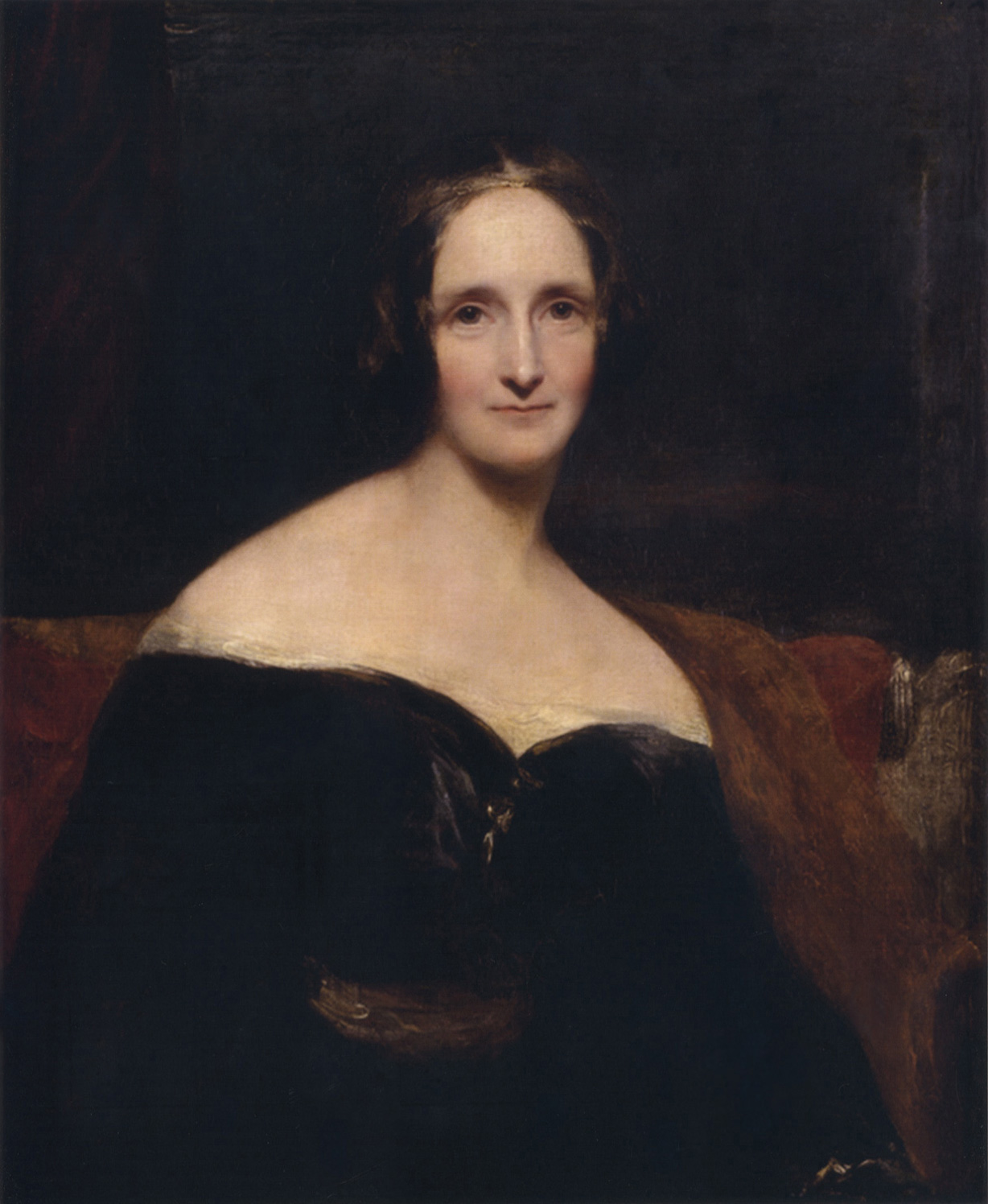
Mary Shelley, via

Reviewed by Susanna

Published: 1826

It's about: The year is 2096. In the past few decades, England has retired the monarchy in favor of a republican government, Greece has reconquered Constantinople, and men have begun to travel long distances by hot air balloon. Now, however, plague ravages the globe, upending law and order, breaking down social barriers, and giving rise to a deadly messianic cult.

The end of the world is observed by Lionel Verney, an English historian who, by accident of fortune, is both immune to the plague and uniquely placed to document its progress. Verney's account begins as an autobiography: he spends the first third of the novel relating his and his sister Perdita's impoverished youth as orphans in the rugged countryside, his eventual friendship with the former Crown Prince of England, Adrian Windsor (who paradoxically cherishes republican beliefs); his courtship of Adrian's vivacious sister Idris; and Perdita's marriage to the brooding, tempestuous Lord Raymond.

The pastoral romance of the first third takes an abrupt, Gothic turn when a seemingly-abandoned ship drifts into an English harbor. Its lone surviving crew member lives only long enough to spread a deadly, voracious contagion to London. As England's population rapidly dies off, Adrian attempts to stave off chaos and lead the few survivors to safety across the English Channel, only to encounter warfare, accident, and further sickness.

I thought: Mary Shelley is better known for Frankenstein, but The Last Man is her lost masterpiece. At the time of its publication in 1826, the possibility of humanity's extinction was considered grotesque and almost offensive. Consequently, the novel languished in obscurity for over a century. It was only after the possibility of a nuclear holocaust was realized in the mid-twentieth century that critics began to revisit The Last Man and recognize its innovative and prescient nature. Specifically, Shelley is the first major writer to treat the theme of apocalypse as a primarily secular, scientific event, and to thoroughly explore is social repercussions. Novels like The Walking Dead and The Road, which prominently feature dwindling bands of survivors attempting to preserve some semblance of morality and civilization in the face of a dubious future, can claim The Last Man in their literary ancestry.

Nevertheless, The Last Man is a highly unique work that differs significantly from its modern descendants. Unlike the emotionally spartan works of fellow post-apocalyptic writers Cormac McCarthy, George Orwell, and Ray Bradbury; Shelley is an unabashedly emotive writer. She ably demonstrates her place in the pantheon of Romantic writers with numerous, rapturously beautiful descriptions of pastoral abundance and rugged wilderness. She is also adept at turning debates on moral philosophy between her characters into riveting, poetic exploration of psychology. These two qualities are united in Shelley's exploration of the psychological differences between Raymond who believes that
Our virtues are the quick-sands, which shew themselves at calm and low water; but let the waves arise and the winds buffet them, and the poor devil whose hope was in their durability finds them sink from under him.
While Adrian muses that
The choice is with us; let us will it, and our habitation becomes a paradise. For the will of man is omnipotent, blunting the arrows of death, soothing the bed of disease, and wiping away the tears of agony.
Shelley's skill at crafting elaborate Gothic thrills only fully comes to the fore in the latter two thirds of the novel, as she expertly conjures up bizarre and unsettling images, increasing their intensity and frequency as the horrors of the plague ramp up. They foreshadow social chaos by disturbing the orderly progress of natural events. As the survivors cross the English Channel
three other suns, alike burning and brilliant, rushed from various quarters of the heavens toward the great orb; they whirled round it. The glare of light was intense to our dazzled eyes; the sun itself seemed to join in the dance, while the sea burned like a furnace, like all Vesuvius alight, with flowing lava beneath.   
Her ability to seamlessly combine political commentary, horror, romance, and nature writing makes for a unique, complex reading experience that readers return to repeatedly. Fans of Wuthering Heights, The Road, and Edgar Allan Poe should make this lost classic a priority. 

Verdict: Stick it on the shelf!

Reading Recommendations: The Wordsworth Classics edition has an engaging introduction and notes by Pamela Bickley and the Wikipedia entry contains a detailed plot summary and character list.

Warnings: None.

Favorite excerpts:
There were few books that we dared read; few, that did not cruelly deface the painting we bestowed on our solitude, by recalling combinations and emotions never more to be experienced by us. Metaphysical disquisitions; fiction, which wandering from all reality, lost itself in self-created errors; poets of times so far gone by, that to read of them was as to read of Atlantis and Utopia....
What I'm reading next: Angle of Repose

Sunday, January 13, 2013

Audiobook Review: Pride and Prejudice and Zombies: Dawn of the Dreadfuls by Steve Hockensmith

(a still from the book trailer)
Reviewed by Christina

Published: 2010

It's about:  Dawn of the Dreadfuls is a prequel, taking place five years before Seth Grahame-Smith's Pride and Prejudice and Zombies.  It opens with a funeral, attended by the Bennets, in which the dearly departed unexpectedly rises from his coffin, heralding a rebirth of the undead in Hertfordshire.  Mr. Bennet dispenses with the zombie; he knows what to do because he fought for the Royal Army during "The Troubles" (England's very first zombie uprising) twenty or so years before.  The interrupted funeral prompts him to hire a young martial artist named Master Hawksworth to train the Bennet sisters in "the deadly arts."  Just as the girls start to show promise as zombie-slayers, a regiment comes to town and takes up residence at Netherfield Park.  Together the Bennets and the soldiers try to protect the locals and the land from the ever increasing numbers of grave-fresh "Dreadfuls" until finally they are besieged in a hideously gory climax.

I thought:  As you might remember, I very much enjoyed listening to P&P&Z back around Halloween.  So I was happy to stay in the zombified Regency universe a little longer but I was curious about what differences I'd notice in Dawn of the Dreadfuls.  As we all know, Jane Austen didn't write a prequel to Pride and Prejudice so this is pretty much fanfic.  And it's not even written by the same author who came up with the original mashup idea.

Can you tell my expectations were a little on the lower end for this one?  And rightly so.  I didn't love it.  The characters seemed a little stiff outside the real P&P story.  The story itself lagged quite a bit, and the slightly more descriptive zombie violence didn't do anything to ramp it up.  I could take or leave most of the new (non-Austen) characters.  Everything just seemed kind of shallow in Dawn of the Dreadfuls.  But maybe I'm being too hard on it.  It is just a zombie novel after all.

Still, I loved loved loved the reader, Katherine Kellgren, just as much as I did in P&P&Z.  She is SO FUNNY, you guys.  So funny.  This story would have completely fallen flat with a less talented reader.  Despite my blah attitude toward Steve Hockensmith, I maybe have to check out the last installment of the trilogy just to keep Ms. Kellgren in my life.

Verdict: In Between.  If you NEED Austen-era zombies in your life, Dawn of the Dreadfuls is pretty fun.  But in general I think you could probably skip this one and go straight to Grahame-Smith's original parody, Pride and Prejudice and Zombies.

Warnings:  Oh, you know.  Brains and severed body parts and stuff.  Zombie gore.

What I'm listening to next:  Maybe Pride and Prejudice and Zombies: Dreadfully Ever After, but I haven't decided for sure yet.

Sunday, December 9, 2012

Review: Nutcracker by E.T.A. Hoffman, illustrated by Maurice Sendak


Reviewed by Christina
[I received a complimentary copy of this book in exchange for an honest review.]

Published: 1984

It's about: Most of us are fairly familiar with the basic story of the ballet: little girl Clara gets a Nutcracker for Christmas, then has an elaborate dream in which he comes to life, defeats a rat king, turns into a prince, and takes Clara to a magical candy kingdom where she watches a sort of multinational (and somewhat culturally insensitive, by today's standards) ballet variety show.  It's a classic Christmas tradition, set to Tchaikovsky's unforgettable score.  
But until reading this beautiful hardcover edition I never realized that the ballet is actually a watered-down version of a much stranger, darker, and more complicated story by Romantic author E.T.A. Hoffmann.  Here "The Nutcracker and the Mouse King" is translated from German by Ralph Mannheim and illustrated by the late, lamented Maurice Sendak.

I thought:  Well, was this book a surprise!  I read a few chapters each night to my five-year-old daughter, Isobel, and we finished it in a week.  It is by far the most literarily advanced thing we've read aloud together, and I loved discovering with her this wide departure from the familiar ballet story.  A good deal of plot probably went over her head- the language isn't always child-friendly, with fairly long and convoluted sentences and uncommon words like "roseate" and "scaramouche."  (Although I should thank Hoffmann/Mannheim for the happy moment during the ballet when Isobel correctly identified hussars!)  But still, if she were writing this review I know she'd have positive things to say and as a mom I have to give it some points.

Will we read it every year and love it again and again?  I'm not sure.  As much as I adore Maurice Sendak's books, the Nutcracker illustrations didn't thrill me.  I suppose I'm too accustomed to the visual beauty of ballet accompanying this story; Mr. Sendak's characters are more straightforward and cartoonish.  And sometimes they really don't accurately illustrate the physical attributes, settings, and action of the text.  That was confusing, especially to Isobel.  If Hoffman describes the prince as having a red coat, why is he wearing a purple one in the picture?  And why are there all these beautiful but tangentially-related full-spread illustrations?  I suppose, since I'm not an artist or illustrator myself, I don't understand the urge to depart so much from the text.  The pictures, especially the full-spread ones, are very nicely done.  But personally I would prefer them to be lavish and glistening.

Still, this is a good edition to look for if you want The Nutcracker's text as it was originally conceived, and if you are a big Sendak fan you'll probably appreciate his illustrations more than I did.  I enjoyed it and I'm happy to have it in my family's collection of holiday books.  And if my kids request it year after year, I will likely come to love it more passionately than I do now.

Verdict: Stick it on the shelf.

Reading Recommendations:  I'd definitely recommend reading this a little bit at a time over the holidays, preferably with snuggly adorable children listening.

Warnings:  Nothin'.  Non-religious readers might not appreciate that this story is slightly more Christian than the ballet.  Very young children might be frightened by some of the darker elements: mild peril, scary rats, toy battle sequences, disfiguring magic spells.

What I'm reading next:  Still Les Misérables

Monday, November 19, 2012

Review: The Annotated Alice by Lewis Carroll

Alice Liddell (right) with her sisters in a photo by Lewis Carroll
Reviewed by Christina

Complete Title and Author info: The Annotated Alice: The Definitive Edition by Lewis Carroll with illustrations by John Tenniel.  Edited and annotated by Martin Gardner.

Published: 1999

It's about:  This edition includes both of Lewis Carroll's classic children's books, Alice's Adventures in Wonderland and Through the Looking Glass, with their original illustrations as well as a "suppressed" episode called "The Wasp in a Wig."
"Each of these texts is accompanied by a lengthy marginal commentary [by Carroll scholar Martin Gardner] that identifies historical and literary references and allusions, explains Carroll's logical and mathematical puzzles, and interprets colloquialisms and idiomatic expressions. Gardner's commentary is sufficiently detailed to be informative without burdening Alice with excessive pedantic baggage." (Library Journal Review)

I thought: If I had read any other edition of the Alice books, I feel certain that I would not have enjoyed them.  I've always avoided reading Lewis Carroll (despite his being a childhood favorite of my husband's) because the idea of nonsense literature is unappealing to me.  I didn't appreciate the Alice story even when I was a kid; the idea of a world where nothing makes sense was so confusing and exasperating (even a little frightening) that I couldn't find the intended humor in it.

So I'm very surprised at how much I loved reading The Annotated Alice.  I learned so much about Lewis Carroll (and his math prof alter-ego, Charles Dodgson) and Victorian England, while at the same time exploring the dream world of Alice Liddell.  It was almost like reading fiction and nonfiction at once!  Awesome!  And you know, with historical and biographical context most of the nonsense makes some kind of sense.  I could never have appreciated these texts without that context.  In fact I enjoyed Gardner's commentary at least as much as the story itself.  Most of the information in the annotations could probably be found online (the wikipedia articles alone are decent) but I don't think I would have done the research on my own- I loved having it right there in the same book next to the text.

One thing I've been thinking about:  there are some pretty scary/disturbing images in these books, considering the intended audience.  I'm thinking about Jabberwocky and the "Pig and Pepper" chapter in particular.  Alice is seven when the books take place, so I think that's probably the approximate age group Carroll had in mind.  I've been thinking about how children's literature has changed since the Alices were first published in 1865.  Were Victorian children unsettled by certain chapters and/or illustrations in these books?  Did they enjoy them partly because of the scariness?  Do we baby children in our storytelling nowadays?  What do you think?

Verdict: Stick it on the shelf!  There are probably readers out there who would prefer to read these stories without commentary so that they can draw their own conclusions about Carroll and his intended meaning (or lack thereof).  But I'm definitely not imaginative or creative enough for that business.

text on the left, annotations on the right.
Reading Recommendations:  Give yourself time to sort of study this one.  I loved reading it slowly enough to absorb the information in the notes.

Warnings: nada

Favorite excerpts: “Now, here, you see, it takes all the running you can do, to keep in the same place. If you want to get somewhere else, you must run at least twice as fast as that!”

“Take care of the sounds and the sense will take care of itself.” 

What I'm reading next:  Nomad by Ayaan Hirsi Ali

Friday, November 2, 2012

Review: Neverwhere by Neil Gaiman


Trevor Peacock as "Old Bailey" in the Neverwhere BBC miniseries via
Reviewed by Connie

Published: 1996

It's about: Richard Mayhew leads an ordinary life with his ordinary fiancee in ordinary London -- that is, until he crosses paths with a girl who has been seriously injured and decides to help her. This one decision turns Richard's life upside-down and leads him on a fantastical journey from London Above to London Below, a world that exists in the sewers of the city, a world with angels and deadly assassins who never die and people who converse with rats.

I thought: I began this book with really no expectations whatsoever. I knew nothing about this book, and I had never read a Neil Gaiman novel, though I suppose I should have suspected the book to be fantastical, since I knew the movies Coraline and Stardust were both based off of Gaiman books. That being said, I was a little off-put at first when characters began speaking to rats and referencing "London Below." Those aren't the types of books I typically read.

However, I stuck this one out, mainly because the writing was so enjoyable, and I must say, I'm glad I did.

Gaiman manages to craft an enjoyable story with believable characters and to keep a non-fantasy reader like myself interested the entire time, which is hard to do, as I personally find a lot of fantasy eye-roll worthy. The writing is easy and wonderfully witty (see the first excerpt below for a taste).

In a word, this book was fun. I had a lot of fun reading it, and I expect to one day have more fun re-reading it with my children when they are old enough to not be completely freaked out by and have nightmares about Croup and Vandemar.

Verdict: Stick it on the shelf

Reading Recommendations: I know we just passed Halloween, but this is a perfect Halloween-y read.

Warnings: a few f-words (like, literally 3-4)

Favorite excerpts:
Croup and Vandemar via
"There are four simple ways for the observant to tell Mr. Croup and Mr. Vandemar apart: first, Mr. Vandemar is two and a half heads taller than Mr. Croup; second, Mr. Croup has eyes of a faded china blue, while Mr. Vandemar's eyes are brown; third, while Mr. Vandemar fashioned the rings he wears on his right hand out of the skulls of four ravens, Mr. Croup has no obvious jewelry; fourth, Mr. Croup likes words, while Mr. Vandemar is always hungry. Also, they look nothing alike at all."

"And then they set foot on Night's Bridge and Richard began to understand darkness: darkness as something solid and real, so much more than a simple absence of light. He felt it touch his skin, questing, moving, exploring: gliding through his mind. It slipped into his lungs, behind his eyes, into his mouth... It felt not so much as if the lights were being turned down but as if the darkness were being turned up."


What I'm reading next: The History of Love by Nicole Krauss

Wednesday, July 18, 2012

Audiobook Review: The Night Circus by Erin Morgenstern

via
 Reviewed by Christina

Published:  2011

It's about: I went into this one knowing almost nothing about it, and I loved the experience of discovering the story from scratch.  Plus, all the synopses I'm finding online are really cheesy.  So I'm not going to tell you anything about the story except that it's about a circus that only operates at night and there's lots of magic involved.  There's more to it, but you've got to read/listen to find out!  Aren't you soooo curious now?

I thought:  Oh, how I enjoyed this audiobook!  It's not the kind of fantastical story I would normally choose for myself, but I had heard it mentioned here and there and wanted to find out what all the fuss was about.  Ambient music hooked me from the moment I hit play, and when the story started Jim Dale kept the mood perfectly.  Listening to him read this book is like listening to a classy British Grandpa tell an intricate bedtime story.  And he doesn't make any of the females sound squawky or breathy or weak; I appreciate that.  I loved listening to him.

Overall, the imaginative nature of The Night Circus wins.  Erin Morgenstern's imagery also rocks; I was continually impressed with the multitude of creative ideas in this book and the vivid, artful way those ideas are described.  Ms. Morgenstern populates her circus with unusual, interesting supporting characters, many of whom turn out to be more important than you initially expect.  Their unexpected significance was something I especially enjoyed toward the end.

I do wish the central love story had been more gradually constructed, maybe through a little more character development with those two main characters.  And I never did come to enjoy the frequent forays into 2nd person; I think the "you" perspective is a pretty weak and hackneyed way to try to force the reader into the story.  Overall, the plot didn't blow me away and there weren't strong themes I could extrapolate and apply to life in general. 

BUT!  Don't let my criticisms stop you from picking up The Night Circus, especially if you like a bit of magic in your fiction. 

Verdict: Stick it on the shelf!

Reading Recommendations: Check it out if you enjoyed The Prestige.  The Night Circus takes place during the same period and sorta shares some basic plot elements.

Warnings: One very brief and tasteful sex scene.  Nothing to deter even the most conservative reader.

Favorite excerpts: “And there are never really endings, happy or otherwise. Things keep going on, they overlap and blur, your story is part of your sister's story is part of many other stories, and there is no telling where any of them may lead.”

“Secrets have power. And that power diminishes when they are shared, so they are best kept and kept well. Sharing secrets, real secrets, important ones, with even one other person, will change them. Writing them down is worse, because who can tell how many eyes might see them inscribed on paper, no matter how careful you might be with it. So it's really best to keep your secrets when you have them, for their own good, as well as yours.” 

What I'm listening to next:  The Postmistress by Sarah Blake

Thursday, April 12, 2012

Review: Till We Have Faces by C.S. Lewis

Psyche Revived by Cupid's Kiss, Antonio Canova

Reviewed by Christina


Published: 1956

It's about: Till We Have Faces is the myth of Cupid and Psyche, retold from the point of view of Psyche's oldest sister, Orual.

I thought: I loved it. After reading 200 or so agonizing pages of Modelland, switching to C.S. Lewis' traditional, eloquent storytelling was a huge relief. I could go on and on about his graceful, subtly witty prose, but chances are you're already familiar with it.

The narrator/protagonist, Orual, is a strong, complex character- a warrior queen who defies and despises the unjust gods who rule her world. She adores Psyche and tries to save her from the unseen monster to whom Psyche has been wed/sacrificed, but human understanding falls short and Orual and Psyche are both subject to the wrath of the gods. The story is dark, much darker than any of this author's better-known books. If there's an explicit moral, I couldn't find it. Unlike the famous Narnia series, Lewis wrote Till We Have Faces to stand independently from theology; the myth haunted C.S. Lewis from his pre-Christian days onward, and he considered Till We Have Faces his most mature work. There are definitely theological and philosophical musings in this book, but no clear answers.

If you've read this, I'd love to hear your thoughts. As I read I kept looking for some obvious metaphor or message, since the other Lewises I've read were Narnia and The Screwtape Letters (both pretty moralistic pieces of fiction). Honestly, Till We Have Faces is miles ahead of those more famous works in terms of thematic subtlety and complexity. The recurring ideas that I noticed all seem to be opposites: beauty/ugliness, humanity/divinity, the nature of love (especially the struggle between love and doubt), and truth/myth.

Verdict: Stick it on the shelf! I'm dying to read this again with a book club. There's lots of potential for intelligent discussion.

Reading Recommendations: If you think you don't like C.S. Lewis, check this one out. If you think you're a big fan of C.S. Lewis, there's still a good chance you haven't read Till We Have Faces. Read it! And then talk to me about it!

Warnings: None. Well, I guess there's some sex-related stuff, but nothing worse than what you learned in your 8th-grade Greek Mythology unit.

Favorite excerpts: "I did not weep nor wring my hands. I was like water put into a bottle and left in a cellar: utterly motionless, never to be drunk, poured out, spilled or shaken. The days were endless. The very shadows seemed nailed to the ground as if the sun no longer moved."

“The complaint was the answer. To have heard myself making it was to be answered. Lightly men talk of saying what they mean. Often when he was teaching me to write in Greek the Fox would say, 'Child, to say the very thing you really mean, the whole of it, nothing more or less or other than what you really mean; that's the whole art and joy of words.'

A glib saying. When the time comes to you at which you will be forced at last to utter the speech which has lain at the center of your soul for years which you have, all that time, idiot-like, been saying over and over, you'll not talk about the joy of words. I saw well why the gods do not speak to us openly, nor let us answer. Till that word can be dug out of us, why should they hear the babble that we think we mean? How can they meet us face to face till we have faces?”

What I'm reading next: Russian Winter by Daphne Kalotay

Sunday, April 1, 2012

Review: Modelland by Tyra Banks!!!!! BEST BOOK EVERRRRRR!!!!!!!

Reviewed by Christina. I've known I would have to read this ever since Connie mentioned it in a post almost two years ago.

Published: 2011

It's about: Poor Tookie de la Crème is 15 and hideously ugly. She doesn't even hope for the same thing every other teenage girl wants: to be selected for celebrity training in a mysterious mountaintop kingdom called Modelland.
But then- shock of shocks!!!!! She IS selected! Tookie, of all people, learns the Ins and terrible Outs of the place where every girl's dreams are supposed to come true.

I thought: YOU GUYS!!!!!!! This book is INCREDIBLE!!!!!

Tookie, as a character, is like SUPER pathetic and sad, and she hates herself so OF COURSE every reader is going to love her and relate to her, especially teenage girls. She's so sad! She's even worse off than you! But even if you don't love Tookie, you'll LOVE all the super clever, alliterative names for everything in this book. It's like a marketing department was consulted for pretty much every sentence! Cray cray, right???? There's also LOTS of rhyming. And these really cool second-person interludes in which the reader is addressed as "dahling." It's kinda like a Greek chorus, only so much more adorable! And so endearing!!

I also LOVED that absolutely nothing is based in any kind of reality. It's like, you have to have faith in the mind of Tyra Banks to read this book. And if you don't believe in her AMAZING imagination, you just aren't going to be able to follow it!!! So BELIEVE. BELIEVE IN TYRA, PEOPLE. Believe in her ability to string together hundreds of incredibly stupid ideas into one really long book! (You can read this totally awesome review if you want more specifics about the bizarre plot.)

But it's not all fantasy and fun. Oh no no. There are some serious issues that we ALL should take to heart more often than we do. Here are the main issues:
  • the perils of sharing makeup with your friends
  • the moral inferiority of designer knock-off handbags
OMG!!!! I can't believe I haven't spent more of my brain power thinking about these SUPER IMPORTANT issues!!!! I mean, people may be starving and dying and stuff in the world, and that's really sad. But WOAH, don't make the world an even worse place by buying a fake Gucci purse from a street vendor in New York because that is SICK AND WRONG.

There are so many things that are really super great and awesome about Modelland, but you shouldn't just take my word for it: you've got to read it for yourself!!!!

Verdict: STICK IT ON THE SHELF!!!11!!!!!!!!

Reading Recommendations: This book will make you feel really pretty and happy about your life because at least you're not as ugly as Tookie. So read it when you need a little boost!
And you don't have to take my word for it. Peep the Goodreads reviews if you really want to know how FAB and FRESH this book is!!

Warnings: Swears and disturbing subject matter and crippling inanity but IT'S SO WORTH IT!!!!

Favorite excerpts: “The Land you thirst for has loomed at the top of the mountain in Metopia for as long as you can remember. But for most of the year it is covered in fog, its color changing with each passing day as if it were a gargantuan mood ring. You begin your mornings staring at the fog hoping for the fateful evening when it will turn a golden yellow and then, finally, like a push-up brassiere, lift.”

What I'm reading next: Till We Have Faces by C.S. Lewis

Happy April Fools' Day!

Monday, October 17, 2011

Review: Wildwood by Colin Meloy, illustrated by Carson Ellis

Reviewed by Christina

Published: 2011

It's about: 12-year-old Prue lives in Portland, OR, not far from a forbidding, fantastical forest called the Impassable Wilderness. One day she takes her baby brother, Mac, to a park where she watches, horrified and helpless, as a murder of crows lift him into the air and carry him into said Impassable Wilderness.

Brave and spunky Prue heads into the forest to rescue Mac. Curtis, a nerdy boy from her school, follows her. They discover an entire world inside the woods, complete with anthropomorphized animals, longstanding rivalries, history and danger.

Basically it's The Labyrinth + Narnia + The Fantastic Mr. Fox. And, by the way, Colin Meloy is the singer/songwriter for The Decemberists.

I thought: So. I don't usually read that much YA, and I definitely am not prone to picking up fantasy-type books. But last week, as I was chasing my children around the library, I noticed this chunky, artful-looking book displayed prominently on the shelf. Then I noticed the author. Then I read the back jacket, with positive reviews from Lemony Snicket, Jonathan Safran Foer, and Michael Chabon. And, rather impulsively given the FIFTY (seriously! I just counted!) books sitting on my shelf waiting to be read, I brought Wildwood to the circ desk.

And folks, I do not regret it! I really had fun with this fast-paced, clever, and well-written piece of fantastical fiction. When I do read my annual fantasy novel I'm always amazed at the creativity that goes into this type of writing. I don't have quirky ideas in my head (alas!) and I am not a storyteller. So when I read a book that creates and describes an entire world, I am really impressed. It is fun to get lost in an adventure in a strange new place, and that's definitely what happened to me with this book. Carson Ellis' simple yet specific illustrations made it even easier to visualize everything.

One thing I'm not sure about: the intended audience. Curtis and Prue are eleven and twelve, respectively, but I'm not sure Meloy's style will really appeal to that age group. He gets a little carried away with detail sometimes, and there are a fair number of unusual vocabulary words in this text; words that I had to look up. But then, maybe I'm not giving middle-schoolers enough credit. And I'd much rather see a book that expects more of its audience than one that is dumbed down for kids. So I'm not really listing this as a flaw. I'd love to hear what a 12-year-old reader thinks of this book.

Verdict: Stick it on the shelf!

Warnings: Some fantasy war violence.

Favorite excerpts: "My dear Prue, we are the inheritors of a wonderful world, a beautiful world, full of life and mystery, goodness and pain. But likewise are we the children of an indifferent universe. We break our own hearts imposing our moral order on what is, by nature, a wide web of chaos. It is a hopeless task."

What I'm reading next: Emmeline by Charlotte Smith (for the Gothic Literature Tour)

Friday, September 23, 2011

Review: Pride and Prejudice and Zombies by Jane Austen and Seth Grahame-Smith

Reviewed by Connie

Published: 2009

It's about: Half the original text of Pride and Prejudice, half zombie parody, Grahame-Smith adapts a classic story about marriage and the rules of civilized society to feature the excitement and humor of managing an epidemic of brain-sucking zombies. In the author's words: "You have this fiercely independent heroine, you have this dashing heroic gentleman, you have a militia camped out for seemingly no reason whatsoever nearby, and people are always walking here and there and taking carriage rides here and there . . . It was just ripe for gore and senseless violence. From my perspective anyway."

Wednesday, June 29, 2011

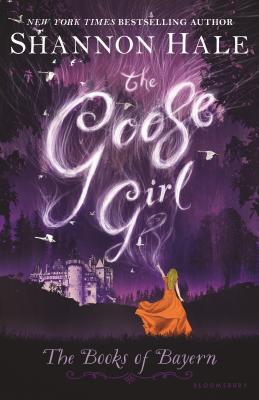
Review: The Goose Girl by Shannon Hale

Reviewed by Liesl

Published: 2005

It's about: Based on the fairy tale by the brothers Grimm, The Goose Girl is about Princess Anidori-Kiladra Talianna Isilee (just "Ani" is fine), a girl who can communicate with horses and birds, but feels out of place as a royal. She cannot live up to her mother's standards and is uncomfortable with people. While en route to an arranged marriage with the prince of the neighboring kingdom Bayern, Ani's lady-in-waiting Selia and half of her guards betray her in a scheme to steal her crown. Ani barely escapes with her life, disguises herself, and sneaks into the capital of Bayern where she becomes the palace goose herder, and tries to figure out what to do.

I thought: Shannon Hale spares no grief with her characters. Anything that brings Ani joy or even is a reminder of who she is taken away from her: her aunt, her father, her horse, her title, and even more. I admired that Shannon Hale is unafraid of putting her characters through hell, because the characters have enough resilience to gain triumph.

Wednesday, June 15, 2011

Percy Jackson and the Olympians series by Rick Riordan

Reviewed by Liesl

Published: 2005

It's about: (Stolen shamelessly from Amazon) Percy Jackson is a good kid, but he can’t seem to focus on his schoolwork or control his temper. When his mom tells him the truth about where he came from, she takes him to the one place he’ll be safe—Camp Half-Blood, a summer camp for demigods on Long Island. There, Percy learns that the father he never knew is actually Poseidon, God of the Sea. Soon Percy finds himself caught up in a mystery that could lead to disastrous consequences. Together with his friends—a satyr and other the demigod daughter of Athena—Percy sets out on a quest to reach the gates of the Underworld (located in a recording studio in Hollywood) and prevent a catastrophic war between the gods.

I thought: At first I was afraid this was going to be some Americanized version of Harry Potter. However, I gave the books an optimistic approach and was pleasantly surprised. The books are entertaining, narrated by Percy and the chapters have eye-catching titles such as "I Become Supreme Lord of the Bathroom" and "My Mother Teaches Me Bullfighting."

The series' biggest strength comes from the Greek mythology. The children often draw parallels from the past mythology to help solve their problems and even throw a few twists in there. The modern-day parallels were especially interesting, what with Mount Olympus moving according to whatever society is at its peak culturally and economically. I was constantly looking up myths and legends to see if Riordan got it right, and just to find the background in general. It was more fascinating when I knew the background and understood better what was going on.

The characters, despite their flaws, are still endearing. I first found Percy's friend Annabeth obnoxious, but she grew on me. Percy entertains well with his sarcastic comments and observations. He's loyal to his friends and mother, and you can understand his frustration over his father abandoning him. The more minor characters, such as the villains and gods, were often more interesting than the main characters because they were so complex and just downright entertaining with their eccentricities. Sometimes they were all for fighting with the demigods and sometimes they were completely against them. I was just as frustrated with them as Percy was, and it made for a more interesting story.

Something that I felt lacked in these books was an emotional impact. It was there, but it took a lot longer for it to come. It felt like the action was there for action's sake and I never felt like the characters were in any real danger. A lot of the emotion seemed to come from the telling, and I couldn't feel anything from that. I needed to see it, to feel it. Riordan's writing improved immensely by the last book and I was finally able to really develop an attachment to these characters and their woes.

Despite the lesser emotional impact, I still loved these books. Rick Riordan is excellent at describing a scene. He can create impressive tension in his action scenes and all the Greek stories were gripping. When I checked out the last book from the library, I ended up finishing the book in the parking lot because I didn't want to put it down to drive home. At the very least, I had a good time.

Verdict: Stick it on the shelf, or at least borrow it from the library. These are worth reading.

Reading Recommendations: I'd say this book is definitely targeted more for kids, but I still enjoyed reading them for a lighter experience. The audiobooks are fantastic for long car trips.

Warnings: None.

Favorite excerpts: "See, bad things happen to me on field trips. Like at my fifth-grade school, when we went to the Saratoga battlefield, I had this accident with a Revolutionary war cannon. I wasn't aiming for the school bus, but of course I got expelled anyway. And before that, at my fourth-grade school, when we took a behind-the-scenes tour of the Marine World shark pool, I sort of hit the wrong lever on the catwalk and our class took an unplanned swim. And the time before that....Well, you get the idea."

What I'm reading next: The Goose Girl by Shannon Hale

Thursday, February 24, 2011

Review: A Wrinkle in Time by Madeleine L'Engle

Reviewed by Connie

Published: 1964

It's about: A science-fiction/fantasy, children's novel about Meg Murry and her younger brother, Charles Wallace Murry, who cross infinite space and time with three "witches" -- Mrs. Whatsit, Mrs. Who, and Mrs. Which -- in order to rescue their scientist father, who is trapped on a "dark planet" in another galaxy. In the process, they come to battle Evil itself.

I thought: I hadn't read this book since childhood, but I decided recently to revisit it, primarily to figure out if it is as weird as I was remembering... and it was.

Let's start with the good points. I respect the allegory of the story and its presentation of battling an Evil that threatens to destroy from within. I also enjoyed reading about some highly unusual characters -- Meg, Calvin, and Charles Wallace. Meg, as the protagonist, is described as awkward, -- we're talking big glasses and braces here -- of mostly average intelligence, easily angry, and sickeningly dependent. I was annoyed with Meg for most of the novel, for always looking to the male characters to sort everything out, so I was pleasantly surprised with and heartily approved of the ending, with her own personal journey that leads her to find courage and confidence within herself.

Other than that, though, I can't exactly sing this book's praises. The allegory, though respectable, was a bit too -- obvious -- for my taste. Granted, this is a children's book, but it comes across to me as if L'Engle sat down and said, "All right, I'm going to write an allegory of good overcoming evil" and THEN came up with every element of the story to fit that. Not my favorite style there.

Plus, it may be that I am brainwashed by the YA literature and movies of today, but I found the story too skeletal -- especially the climax. Things are resolved too quickly with not enough struggle, not enough adventure, not enough meat. Just a personal preference.

Verdict: In-between

Reading Recommendations: I wouldn't call this a "must read," though I know LOTS of people who would say otherwise.

Warnings: quite a bit of whining and a dash of sentimentality, not to mention a crystal ball

Interesting Information: Disney made a movie version of the book back in 2003. I haven't seen it, but I love Madeleine L'Engle's comment on it. When someone asked her if the book fulfilled her expectations, she replied, "Yes, I expected it to be bad, and it is." Gotta respect her bluntness.


What I'm reading next: Never Let Me Go by Kazuo Ishiguro

Thursday, October 28, 2010

Review: Anansi Boys, by Neil Gaiman

Reviewed by Christina

Published: 2005

It's about: Our protagonist, Fat Charlie Nancy, is an unambitious, painfully shy Englishman of American origin. When his estranged father dies unexpectedly, Fat Charlie travels to his childhood hometown in Florida to attend the funeral. Here Fat Charlie learns from an old family friend that he has a brother. He is told that if he wishes to meet his brother, he need only mention it to a spider. Back in London, Fat Charlie drunkenly tells a spider he'd like to meet his brother. The next day, said brother (a handsome and charismatic man named Spider) shows up and starts mucking about in Fat Charlie's life. Adventures ensue.

[Note: Anansi Boys is a spin-off of an earlier Neil Gaiman novel called American Gods, but it's not a sequel or a prequel or anything. I mean, there would be no reason to read one book before the other.]

I thought: I suppose I'm going to have to stop saying that I don't read Fantasy, because this is the third book I've read by Neil Gaiman and I'm not sorry to admit it. But Gaiman is so far removed from what I consider traditional Fantasy (dragons and faire maidens and... well, LotR) that I think he deserves a different category. His books are set within our own real world, but with a sort of magical overlay. In this sense, Gaiman reminds me of Magical Realism more than Fantasy, though he relies more heavily on magic than, say, Gabriel García Márquez does. [I'm not sure I understand where Magical Realism ends and Fantasy begins. Can somebody enlighten me?]
Anyway, Anansi Boys. It's very clever and dryly funny. It has sympathetic, dynamic characters and smart references to West African mythology and folklore. The plotting is brilliant, there's some nice foreshadowing, and then a real page-turner of a climax. It's a quick, exciting read, and I enjoyed it. Anansi Boys is very different from American Gods in that it is lighthearted and tightly-woven, and I found the characters far more likeable.
BUT. I do have some complaints. I couldn't overlook the occasional line of cheesy, action-movie-ish dialogue, and most of the dénouement was almost sickeningly sweet. I'm not a big fan of the cover design (not the author's fault). And, to be honest, magical fiction just isn't really my personal favorite.

Verdict: Hm... Yeah, I'm going to stick it on the shelf. It's well-written and you won't be sorry you read it. Neil Gaiman is one of the best in his class, and Anansi Boys doesn't disappoint.

Reading Recommendations: Suspend your disbelief!
If you want to supplement, I recommend one of my favorite picture books, "A Story, A Story" (It's a Caldecott Medal Winner, so any public library should have at least one copy.)
Anansi's Wikipedia article is interesting.
And of course, if you like Anansi Boys you can check out American Gods.

Warnings: Some innuendo, a bit of violence, a little language. Nothing horribly offensive, but it's not squeaky-clean either.

Favorite excerpts:
"He could see the sunrise beginning, a huge blood orange of a morning sun surrounded by gray clouds tinged with scarlet. It was the kind of sky that makes even the most prosaic person discover a deeply buried urge to start painting in oils."

And the best dedication page I've ever read:
"You know how it is. You pick up a book, flip to the dedication, and find that, once again, the author has dedicated a book to someone else and not you.
Not this time.
Because we haven't yet met/have only a glancing acquaintance/are just crazy about each other/haven't seen each other in much too long/are in some way related/will never meet, but will, I trust, despite that, always think fondly of each other...
this one's for you.
With you know what, and you probably know why."

What I'm reading next: Waffle Street by James Adams

Friday, September 17, 2010

Guest Review: The Giver by Lois Lowry

For those of you who missed the post, we here at the Blue Bookcase are looking to expand our horizons and add a new writer! (Or more than one, perhaps) This continues our session of "test-runs" for writers who look promising, so let's give a warm welcome to guest reviewer/aspiring BB writer, Katie! Be sure to comment and tell us what you think! (And for other interested writers, it's not too late to apply! Check out this post for more details)

My name is Katie and a soon to be graduate of college majoring in English.  What's a girl to do now that there are no more English classes to read for?  Pick my own books of course!  And maybe go for a Master's degree in English next Fall? Sure, why not?

Published: 1993


It's about: A young boy, named Jonas,  growing up in a place called "The Community."  There are many rules and "understandings" within the "Community" that are not questioned, only accepted, taught to children and upheld by adults.  When we are introduced to Jonas we discover along with him that the things that he has been conditioned to learn, uphold, and respect are not the whole truth.  As Jonas figures out little by little, he begins to think that perhaps there is a way to transform the ways of doing that everyone has been conditioned to be afraid of changing.

I thought:  This book progressed perfectly.  We, as the reader, grow with Jonas as he grows.  Lowry helps us to feel the same emotions that Jonas feels through the detailed imagery of the memories that he receives.  I thought for sure that there would be a huge twist at the end of the story (mostly because Jonas is not the narrator, I thought for sure the story was being told by another "giver").  Because of it, I was unfulfilled with the ending.  But thinking back on it, I can see why it didn't end with another "giver." 

Verdict: I would borrow this book from a friend.  Also, I wouldn't be too worried to lend out my copy to a friend either! 
Reading Recommendations: If you are looking for a quick read this is a good book to pick up.  The chapters are short and perfect for reading in the small down time you might have throughout the day (I hate having to stop in the middle of a chapter!).  A ten minute break at work?  Bring out this book!

Warnings:  I don't think there are any warnings really.  But I did research that this was a banned book  (for middle schoolers at least) because of the talk of "releasing" (assisted suicide) and "stirrings" (sexual feelings). 

Favorite Excerpts: "'It's as if...' The man paused, seeming to search his mind for the right words of description. 'It's like going downhill through deep snow on a sled,' he said, finally.  'At first it's exhilarating: the speed; the sharp, clear air; but then the snow accumulates, builds up on the runners, and you slow, you have to push hard to keep going...'"

Wednesday, September 8, 2010

My Sparkling Misfortune by Laura Lond

Reviewed by Liesl


Published: 2010

It's about: A villain named Lord Arkus is driven from his home when thwarted by his nemesis, Prince Kellemar. He swears revenge, and in his plotting, attempts to capture a "gormack," a sort of demon that would aid him in his revenge. Instead he inadvertently captures a "sparkling," also a magical creature. Arkus binds the sparkling, whom he names Jarvi, to serve him for 5 years. Only problem is, it is in the nature of a sparkling to only do good deeds - not evil.

I thought: It was rather difficult to get into at first. However, once I was into the story, I enjoyed the plot. It was easy to predict a few things, which bothered me, and I wished to see more females in the story. There are only males in this entire story with the exception of two very minor females. I wish we had more back story on certain elements in the story and had a more established relationship between protagonist and antagonist. However, the relationship between Jarvi and Arkus is entertaining, and Arkus has an amusing narrative, and becomes quite endearing once you see him care about people other than himself.

Verdict: I'd say somewhere in between. I didn't find it amazing, but it was entertaining.


Reading Recommendations: It's a pretty light read, so you could finish it in one sitting if you'd like.

Warnings: Zero.

Favorite excerpts: Yes, you have guessed it. I am a villain. What? You wanted a noble hero? Well, tough. You've got the wrong book then.

"Arkus, you are despicably wicked," he began.
Blatant flattery, I noted. He wants something from me.

Tuesday, May 18, 2010

Dragon Slippers by Jessica Day George

Reviewed by Liesl

Published: 2008

It's about: Creel's aunt has the brilliant idea of sending her niece to the local dragon, so that perhaps some noble prince or knight will come and rescue Creel and marry her, thus resulting in the entire family living with them and ending their poverty. Creel has other ideas and befriends the dragon and convinces him to give her something from his hoard, which particular hoard contains shoes. She finds a comfortable pair that fits her and goes to the city in hopes of starting a dress shop. On the way, she befriends more dragons, and when she gets to the city, her shoes begin to cause more trouble than she ever bargained for.

I thought: Although slow for the first few pages, the moment Creel befriends the first dragon, the story takes off. It's remarkably engaging, although not perfect. The plot was interesting and the world intriguing, but the prose was flawed and a little trite. Not all of the characters were as well-rounded as I would have liked, but I was so absorbed by this book that I didn't let it get to me until I read the sequels. The dragons were probably the most interesting characters, but Creel was just as good. I got strong Goose Girl vibes from this, but in a good way. I really did like this book.

Verdict: Sure, we can stick it on the shelf.

Reading Recommendations: It's a YA fantasy novel, so I'm not sure how many people on here are interested in it. I, however, loved it, and recommend it to anyone of any age. It makes for a good fluffy read.

Warnings: Nothing. It practically squeaks, it's so clean.

Favorite excerpts: "Glass. Everywhere I looked there was glass. I had had no idea that there were so many colors in the world, let alone that glass could be made in such hues. The cave was filled with stained glass windows of every size, and depicting every beast and god and legendary hero imaginable. They hung from the ceiling on fine silver chains, and somehow, despite the fact that we were deep in a hill in the middle of Rath Forest, light shone through them."