Showing posts with label Childrens. Show all posts

Sunday, December 9, 2012

Review: Nutcracker by E.T.A. Hoffman, illustrated by Maurice Sendak


Reviewed by Christina
[I received a complimentary copy of this book in exchange for an honest review.]

Published: 1984

It's about: Most of us are fairly familiar with the basic story of the ballet: little girl Clara gets a Nutcracker for Christmas, then has an elaborate dream in which he comes to life, defeats a rat king, turns into a prince, and takes Clara to a magical candy kingdom where she watches a sort of multinational (and somewhat culturally insensitive, by today's standards) ballet variety show.  It's a classic Christmas tradition, set to Tchaikovsky's unforgettable score.  
But until reading this beautiful hardcover edition I never realized that the ballet is actually a watered-down version of a much stranger, darker, and more complicated story by Romantic author E.T.A. Hoffmann.  Here "The Nutcracker and the Mouse King" is translated from German by Ralph Mannheim and illustrated by the late, lamented Maurice Sendak.

I thought:  Well, was this book a surprise!  I read a few chapters each night to my five-year-old daughter, Isobel, and we finished it in a week.  It is by far the most literarily advanced thing we've read aloud together, and I loved discovering with her this wide departure from the familiar ballet story.  A good deal of plot probably went over her head- the language isn't always child-friendly, with fairly long and convoluted sentences and uncommon words like "roseate" and "scaramouche."  (Although I should thank Hoffmann/Mannheim for the happy moment during the ballet when Isobel correctly identified hussars!)  But still, if she were writing this review I know she'd have positive things to say and as a mom I have to give it some points.

Will we read it every year and love it again and again?  I'm not sure.  As much as I adore Maurice Sendak's books, the Nutcracker illustrations didn't thrill me.  I suppose I'm too accustomed to the visual beauty of ballet accompanying this story; Mr. Sendak's characters are more straightforward and cartoonish.  And sometimes they really don't accurately illustrate the physical attributes, settings, and action of the text.  That was confusing, especially to Isobel.  If Hoffman describes the prince as having a red coat, why is he wearing a purple one in the picture?  And why are there all these beautiful but tangentially-related full-spread illustrations?  I suppose, since I'm not an artist or illustrator myself, I don't understand the urge to depart so much from the text.  The pictures, especially the full-spread ones, are very nicely done.  But personally I would prefer them to be lavish and glistening.

Still, this is a good edition to look for if you want The Nutcracker's text as it was originally conceived, and if you are a big Sendak fan you'll probably appreciate his illustrations more than I did.  I enjoyed it and I'm happy to have it in my family's collection of holiday books.  And if my kids request it year after year, I will likely come to love it more passionately than I do now.

Verdict: Stick it on the shelf.

Reading Recommendations:  I'd definitely recommend reading this a little bit at a time over the holidays, preferably with snuggly adorable children listening.

Warnings:  Nothin'.  Non-religious readers might not appreciate that this story is slightly more Christian than the ballet.  Very young children might be frightened by some of the darker elements: mild peril, scary rats, toy battle sequences, disfiguring magic spells.

What I'm reading next:  Still Les Misérables

Monday, November 19, 2012

Review: The Annotated Alice by Lewis Carroll

Alice Liddell (right) with her sisters in a photo by Lewis Carroll
Reviewed by Christina

Complete Title and Author info: The Annotated Alice: The Definitive Edition by Lewis Carroll with illustrations by John Tenniel.  Edited and annotated by Martin Gardner.

Published: 1999

It's about:  This edition includes both of Lewis Carroll's classic children's books, Alice's Adventures in Wonderland and Through the Looking Glass, with their original illustrations as well as a "suppressed" episode called "The Wasp in a Wig."
"Each of these texts is accompanied by a lengthy marginal commentary [by Carroll scholar Martin Gardner] that identifies historical and literary references and allusions, explains Carroll's logical and mathematical puzzles, and interprets colloquialisms and idiomatic expressions. Gardner's commentary is sufficiently detailed to be informative without burdening Alice with excessive pedantic baggage." (Library Journal Review)

I thought: If I had read any other edition of the Alice books, I feel certain that I would not have enjoyed them.  I've always avoided reading Lewis Carroll (despite his being a childhood favorite of my husband's) because the idea of nonsense literature is unappealing to me.  I didn't appreciate the Alice story even when I was a kid; the idea of a world where nothing makes sense was so confusing and exasperating (even a little frightening) that I couldn't find the intended humor in it.

So I'm very surprised at how much I loved reading The Annotated Alice.  I learned so much about Lewis Carroll (and his math prof alter-ego, Charles Dodgson) and Victorian England, while at the same time exploring the dream world of Alice Liddell.  It was almost like reading fiction and nonfiction at once!  Awesome!  And you know, with historical and biographical context most of the nonsense makes some kind of sense.  I could never have appreciated these texts without that context.  In fact I enjoyed Gardner's commentary at least as much as the story itself.  Most of the information in the annotations could probably be found online (the wikipedia articles alone are decent) but I don't think I would have done the research on my own- I loved having it right there in the same book next to the text.

One thing I've been thinking about:  there are some pretty scary/disturbing images in these books, considering the intended audience.  I'm thinking about Jabberwocky and the "Pig and Pepper" chapter in particular.  Alice is seven when the books take place, so I think that's probably the approximate age group Carroll had in mind.  I've been thinking about how children's literature has changed since the Alices were first published in 1865.  Were Victorian children unsettled by certain chapters and/or illustrations in these books?  Did they enjoy them partly because of the scariness?  Do we baby children in our storytelling nowadays?  What do you think?

Verdict: Stick it on the shelf!  There are probably readers out there who would prefer to read these stories without commentary so that they can draw their own conclusions about Carroll and his intended meaning (or lack thereof).  But I'm definitely not imaginative or creative enough for that business.

text on the left, annotations on the right.
Reading Recommendations:  Give yourself time to sort of study this one.  I loved reading it slowly enough to absorb the information in the notes.

Warnings: nada

Favorite excerpts: “Now, here, you see, it takes all the running you can do, to keep in the same place. If you want to get somewhere else, you must run at least twice as fast as that!”

“Take care of the sounds and the sense will take care of itself.” 

What I'm reading nextNomad by Ayaan Hirsi Ali

Friday, November 16, 2012

Review: A Girl from Yamhill & My Own Two Feet by Beverly Cleary


A Girl from Yamhill & My Own Two Feet by Beverely Cleary
Reviewed by Christine-Chioma

Published: 1988 (A Girl from Yamhill) & 1995 (My Own Two Feet)

It's about: These two books are autobiographies from Beverely Cleary, the famous writer of the much-beloved Muggie Maggie, Dear Mr. Henshaw, and the Ramona series. A Girl from Yamhill covers some family history, Clearly's girlhood and young adulthood in Oregon until she leaves home for college. My Own Two Feet takes off where A Girl from Yamhill finished and covers Clearly's life up until the publication of her first books.

I thought: These are some of my favorite books. I was delighted to know that some of the stories about Ramona were based off Cleary (such as taking one bite into multiple apples because the first bite tastes the best). There were a lot of humorous parts in the memoirs especially in A Girl from Yamhill. Cleary didn't sugarcoat her life. I was impressed by Cleary's candor especially in regards to the strained relationship between her and her mother. Although written several decades after the events occurred, Cleary was able to appropriately capture her thoughts at various ages and stages in her life. She is a great story-teller and someone who understands children well. It was fascinating to read about life during the Depression, what college was like for women in the 1940's, and her impressions of the pacific northwest and California, which are place that are very dear to me. I am really impressed by Cleary and think she's a great role model for women. She has a website that is worth checking out as well.

Verdict: Stick it on the shelf or Rubbish Bin? Stick it on the shelf! I wish she had continued writing more about her life.

Reading Recommendations: For young (12ish) and older! The books easily flow into each other and I think the only reason they aren't just one book is because of the length and because she wrote the second book years later, but I would definitely recommend reading both.

Warnings: Nothing at all offensive

Favorite excerpts: Sometimes it was Uncle Fred, my father's oldest brother, who had a fascinating bald head. After we passed him, Mother said, "You mustn't stare at Uncle Fred's bald head. You might hurt his feelings." How could I hurt his feelings when I so admired his bald head? I once tried to cut off my own hair so I would be bald, too. - A Girl from Yamhill

Claudine and I studied The Century Handbook of Writing, giggling all the way. Examples seemed even funnier. When we came to Rule 68, "Avoid faulty diction," we studied the examples: "Nowhere near. Vulgar for not nearly." "This here. Do not use for this." "Suspicion. A noun. Never to be used as a verb." Our conversation became sprinkled with gleeful vulgarisms we had never used before. When I announced my presence by noisily tap-dancing on the Klums' wooden porch and probably annoying all the neighbors on the block, Claudine said she was nowhere near ready for school. "I suspicioned you weren't." Claudine's reply was something like, "This here shoe-lace broke." - A Girl from Yamhill

I knew they were thinking of me and missing me more than I, on the brink of a new life, was missing them - My Own Two Feet

I was not entirely sure I wanted to stay with relatives again. Even though I loved them all there had been moments of discomfort, of not knowing where I stood, of feeling I was not doing the right thing. Beneath my happiness there had been some strain... - My Own Two Feet

Some of Professor Lehman's words also echoed through my mind: "The minutiae of life", and "the proper subject of the novel is universal human experience." - My Own Two Feet

What I'm reading next: The Age of Miracles  by Karen Thompson Walker

Wednesday, August 29, 2012

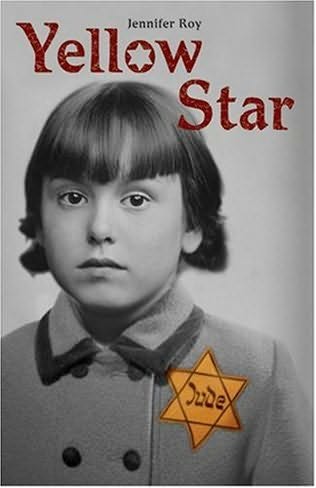
Review: Yellow Star by Jennifer Roy

childen in the Lodz ghetto (via)
Yellow Star by Jennifer Roy

Reviewed by Ingrid

Published: 2006

It's about: Written in simple free verse, this is the fictionalized, first person account of a young girl named Sylvia who survived WWII hidden in the Lodz ghetto.  The story is based on extensive interviews with the author's aunt Sylvia, one of only twelve children and 800 survivors to come out of the ghetto at the end of the war.

I thought: A wonderful woman named Shauna who works with my dad gave me this book. Shauna told me that her younger daughter loves this book and rereads it every year, and knowing that I also read a lot of holocaust books when I was younger, she thought I would enjoy it.

And I did! The author did a great job of presenting an unsettling, emotionally heavy story in a way that is accessible to young readers and doesn't whitewash. Because the narrator is only 4 1/2 when the story begins, the writing is very simple. While written in verse, the story is clearly meant to be read primarily, if not solely as a narrative. I wasn't sure what to make of this at first, but as I finished the book I realized the verse form was fitting and worked quite well - it simplified the text down to the basics without making it feel dumbed-down. It truly made the narrative feel as if it were told by a child. I loved how Jennifer Roy was willing to risk using free-verse in a rather unconventional way. It worked beautifully.

I would highly recommend this book as a good introduction to WWII for young readers. While it does have some violence, it isn't anything that older children couldn't handle. For example, Sylvia tells us that people are shot in the street, but she never witnesses it directly and so it isn't described in detail. This book is a good introduction to questions of morality as played out in the real world.

Verdict: Stick it on the shelf.

Reading Recommendations: While anyone could enjoy this book, I especially would recommend it to elementary/middle school aged readers. (Ages 6-12)

Warnings: Some violence.

Favorite excerpts:

"Dora feels bad for me
having to stay inside all the time,
so she brings home funny stories and jokes
to cheer me up.
We sit together on her bed in the evening
and talk.
She tells me about the factory.
Now they are making munitions.
Bullets and weapons
for the Nazis to win the war.

The Nazis want to take over the world,
Dora believes.
They think that they are better than everyone else,
and they especially hate the Jews.

'Why do they hate us so much?' I want to know.
I have asked this before, but maybe
I'll understand better,
now that I'm older.
'They think we killed their God,' replies Dora.

This makes little sense to me,
because no on I know ever killed anyone.
Then I become worried.

'God is dead?' I say.

'Not our God, their God,' Dora says.
I'm still confused but I'm relieved.
God is still alive.

Then I have a new worry.
If God dies, who will run the world?
I hope it's not the Nazis.
I want to ask Dora about this,
but she has fallen asleep."

Tuesday, December 6, 2011

Top Ten Tuesday: Lucia's Childhood Favourites


This week's Top Ten Tuesday, hosted over at the Broke and the Bookish, I (Lucia) knew would be easy. But choosing ONLY ten childhood favourites... I think picking Christmas gifts for small children is the most fun of all holiday gift buying. So!

Fantastic Mr Fox and The Twits by Roald Dahl. The former is the first book I remember reading by myself and the latter I recently read to some French kids who referred to it as 'Les Twits.'

Hazel Green and Antonio S and the Mystery of Theodore Guzman

by Odo Hirsch. After reading Hazel Green I decided I would be either a baker or a florist (not happening), and also become that really ballsy neighbourhood kid (think Flavia de Luce of The Sweetness at the Bottom of the Pie). I actually don't really remember what Antonio S was about or what happened but I definitely remember enjoying it.

Possum Magic by Mem Fox. Classic! And with very
beautiful illustrations.


Holes by Louis Sachar. This was probably the most complicated plot I had read at the time, and boy was that appealing.

Peter Pan by J.M Barrie.

The Sisterhood of the Travelling Pants by Ann Brashares. Does thirteen still count as a child? Legally yes, I guess. This was the first 'teenage' fiction book that I read and recently reread.

The Upside-Down Girl by Justin D'Ath. About a girl who rides a roller coaster so many times she becomes 'degravitised.'


The Gift of the Gab by Morris Gleitzman. Rowena is literally dumb, but still manages the gift of the gab. You can read the first chapter here.

Have a good week!

Monday, October 17, 2011

Review: Wildwood by Colin Meloy, illustrated by Carson Ellis

Reviewed by Christina

Published: 2011

It's about: 12-year-old Prue lives in Portland, OR, not far from a forbidding, fantastical forest called the Impassable Wilderness. One day she takes her baby brother, Mac, to a park where she watches, horrified and helpless, as a murder of crows lift him into the air and carry him into said Impassable Wilderness.

Brave and spunky Prue heads into the forest to rescue Mac. Curtis, a nerdy boy from her school, follows her. They discover an entire world inside the woods, complete with anthropomorphized animals, longstanding rivalries, history and danger.

Basically it's The Labyrinth + Narnia + The Fantastic Mr. Fox. And, by the way, Colin Meloy is the singer/songwriter for The Decemberists.

I thought: So. I don't usually read that much YA, and I definitely am not prone to picking up fantasy-type books. But last week, as I was chasing my children around the library, I noticed this chunky, artful-looking book displayed prominently on the shelf. Then I noticed the author. Then I read the back jacket, with positive reviews from Lemony Snicket, Jonathan Safran Foer, and Michael Chabon. And, rather impulsively given the FIFTY (seriously! I just counted!) books sitting on my shelf waiting to be read, I brought Wildwood to the circ desk.

And folks, I do not regret it! I really had fun with this fast-paced, clever, and well-written piece of fantastical fiction. When I do read my annual fantasy novel I'm always amazed at the creativity that goes into this type of writing. I don't have quirky ideas in my head (alas!) and I am not a storyteller. So when I read a book that creates and describes an entire world, I am really impressed. It is fun to get lost in an adventure in a strange new place, and that's definitely what happened to me with this book. Carson Ellis' simple yet specific illustrations made it even easier to visualize everything.

One thing I'm not sure about: the intended audience. Curtis and Prue are eleven and twelve, respectively, but I'm not sure Meloy's style will really appeal to that age group. He gets a little carried away with detail sometimes, and there are a fair number of unusual vocabulary words in this text; words that I had to look up. But then, maybe I'm not giving middle-schoolers enough credit. And I'd much rather see a book that expects more of its audience than one that is dumbed down for kids. So I'm not really listing this as a flaw. I'd love to hear what a 12-year-old reader thinks of this book.

Verdict: Stick it on the shelf!

Warnings: Some fantasy war violence.

Favorite excerpts: "My dear Prue, we are the inheritors of a wonderful world, a beautiful world, full of life and mystery, goodness and pain. But likewise are we the children of an indifferent universe. We break our own hearts imposing our moral order on what is, by nature, a wide web of chaos. It is a hopeless task."

What I'm reading next: Emmeline by Charlotte Smith (for the Gothic Literature Tour)

Monday, September 12, 2011

Review: Smile by Raina Telgemeier

Reviewed by Liesl

Published: 2010

It's about: An autobiographical graphic memoir detailing Raina Telgemeier's life from 6th grade to 9th grade. When she was in 6th grade, Telgemeier tripped while chasing a friend and knocked out her two front teeth. Ouch. The following years she had to go through torturous dental procedures in order to fix her teeth, what with braces, headgear, gum problems, false teeth, root canals, realignment of her upper teeth, and that's just the teeth. She also deals with social problems with her friends and encounters with crushes and earthquakes, but Raina survives and lives to tell the tale.

Friday, August 12, 2011

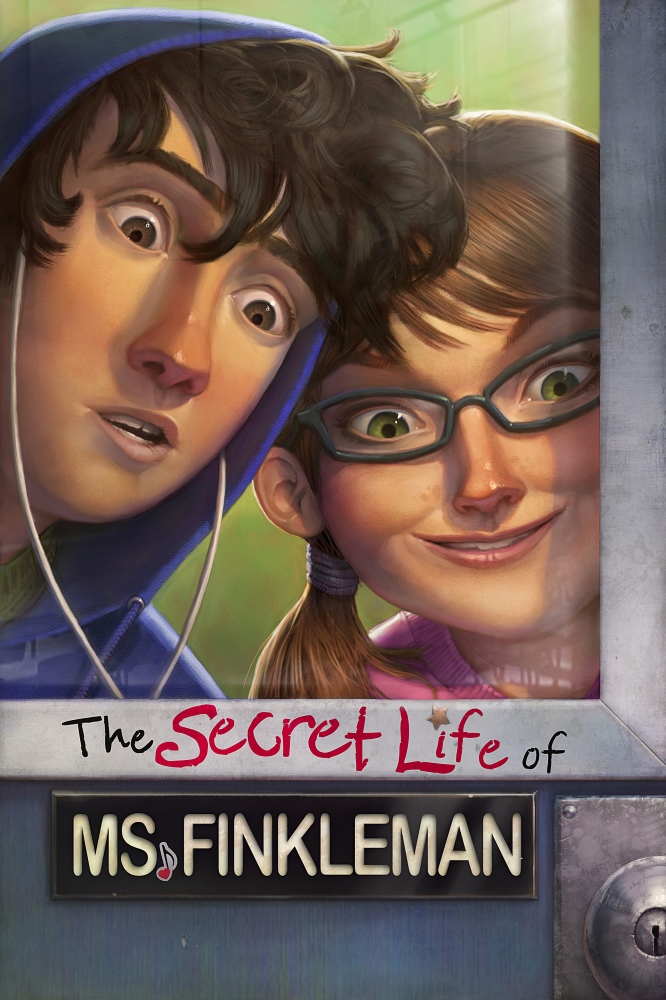
The Secret Life of Ms. Finkleman by Ben H. Winters

Reviewed by Liesl

Published: 2010

It's about: (Stolen from the jacket cover) It all starts with a Special Project in Mr. Melville's Social Studies class: Solve a mystery in your own life. For seventh grader Bethesda Fielding, one mystery is too tempting to ignore: Ms. Finkleman. Bethesda is convinced that her mousy Music Fundamentals teacher is hiding a secret life, and she's determined to find out what it is. But no one is prepared for what she learns. Ms. Finkleman used to be...a rock star? Soon the whole school goes rock crazy, and a giant concert is in the works with none other than timid Ms. Finkleman at the helm! But the case isn't quite closed, and the questions continue to swirl for Bethesda. Could there be even more to the secret life of Ms. Finkleman than she already revealed? With the help of her rock-obsessed classmate Tenny Boyer, Bethesda won't stop until she solves the real mystery of Ms. Finkleman once and for all.

I thought: I confess, I bought this book for the cover. I was on a buying spree at Borders, and besides, I really liked the art of the artist who did it, so why not? Of course, that's risky. Don't judge a book by its awesome cover and all.

However, I'm glad to report that this book lived up to the charm of its cover. The writing is lively and delightful, told from a pretty much omniscient narrator that reveals just enough to help you piece the story together, but also withholds information to keep the reader intrigued. Its protagonist, Bethesda, is smart and works hard without being too much of an annoying know-it-all, and her classmates and teachers are entertaining. It has a School of Rock feel to it, what with the students' obsession with rock bringing out new personalities within them, but it still feels refreshing.

While this novel is more plot-driven than character-driven, the characters nonetheless are what brings the story to life. From the space-cadet Tenny to the psychotic principal Van Vreeland to the dictator Mr. Melville, I adored each character and constantly shouted in delight at their little mannerisms.

Verdict: Stick it on the shelf.

Reading Recommendations: Probably meant more for kids, as some of the characters are a bit much, but hey, I liked it. Easy read. Take an afternoon off.

Warnings: teenagers, with graphic exclamations of deity

Favorite excerpts: Bethesda stood and addressed the other kids at the table as if she were making a big closing argument in a courtroom. "This woman is a part of our lives! She's a part of our community! We take music from her every single day." (Which wasn't true, since music and art alternated, plus there were weekends and everything, but nobody interrupted. Bethesda was on a roll.) "And yet we don't know the first thing about her! Ms. Finkleman is a walking, talking mystery, right in our midst, and I am going to solve her! I mean solve it! I mean -- you know what I mean!"
And with that, Bethesda spun on her heel and exited the lunchroom. And then, a second later, came back. "I forgot my Snapple."
Then she spun on her heel and exited the lunchroom again.

"You are looking at me like I'm wearing a giant foam sombrero that says GO GROVER CLEVELAND on it."
"Yes. I was. I may have been. I can't remember. But, as you know, the fact of the matter is...you are wearing a giant foam sombrero that says GO GROVER CLEVELAND on it."
Principal Van Vreeland leaped up from her desk. "And whose fault is that?"
"Um -- mine?" stammered Jasper.
"No," snapped Principal Van Vreeland. "But good guess."

In her imagination, Bethesda fixed her gaze on a distant mountaintop, reshouldered her heavy pack, and kept climbing. She had been tutoring Tenny Boyer in American history for three weeks, and they hadn't made much progress. Bethesda had decided that her task was a mountain, and she was a mountain climber. A brave mountain climber! A dauntless mountain climber! Audacious! Steadfast! Intrepid! (She had looked up brave in the thesaurus.) She was counting on the mental imagery to inspire her, hoping that if she just worked hard enough, Tenny would finally start getting this stuff.

What I'm reading next: Still Johnny Tremain (I get distracted easily), also Three Willows

Monday, March 28, 2011

Review: Where the Red Fern Grows, by Wilson Rawls

Reviewed by Christina
(First, a note: In just a couple of weeks, my family will be welcoming a Redbone Coonhound puppy! I'm so excited I can hardly contain myself, and I've been reading about puppy/dog training nonstop. So naturally, I had to check out my breed's most famous representation in popular culture, Where the Red Fern Grows.)

Published: 1961

It's about: Ten-year-old Billy lives on a small family farm in northeastern Oklahoma, and the thing he wants most in the world is a pair of good coonhounds. His family are poor and can't afford the expense of two purebred puppies, so Billy secretly works and saves for two years until finally he can buy them himself. He works tirelessly to train the pups, and they quickly become his closest friends. Old Dan and Little Ann, as they're called, grow up to be exceptionally fine coonhunting dogs.
Billy and his hounds encounter success, adventure, and tragedy in this classic children's novel.

I thought: First of all, let me just say that I would have LOVED this book if I had read it as a kid. I know I would have sobbed at the ending and subsequently begged my parents for a farm in the Ozarks and two puppies. But reading it as an adult, I found my reaction to be a bit more reserved, and I'm having some trouble organizing my thoughts. As usual, I seem to have more questions than firm opinions.

Right from the beginning, I was surprised at how emotional Billy was. It seems his first reaction to almost every event, positive or negative, is to cry. Honestly, there are at least 15 mentions of Billy crying in this short book. I too have always expressed myself mainly through tears. But I grew up with three brothers who didn't cry nearly as easily, especially not when they were Billy's age- ten to fourteen or fifteen years old. Is this a sign of the changing times? Is it more unacceptable now for boys to cry than when this story takes place in the early part of the twentieth century? What about in the early '60's when it was written? Or I am over thinking this? Is Billy just an unusually tearful boy?

Speaking of crying, the parts that had the strongest emotional effect on me were Billy's interactions with his parents and grandparents, and I'm sure I wouldn't have been as sensitive to those aspects of the story if I were a part of the intended audience (children). His family loves and respects Billy so much, and they want him to have everything he wants; in some ways, Billy has an ideal family situation. But their circumstances just don't allow for Billy to be spoiled or coddled in any way, which was heartbreaking to read. And I couldn't help but notice Billy's relationship with his mother. He clearly loves her and can't bear to make her worry, but he also believes he knows better than her in most situations, and he occasionally lovingly condescends when he speaks to her. I imagine this is the same attitude a good boy like Billy would eventually have toward his wife, and I'm guessing it's indicative of the attitude toward women in his world (and possibly in Wilson Rawls' world, too). Billy's three sisters are uniformly silly and fearful, so there really is no strong female presence in his life. I wonder if I would have noticed that if I'd read this when I was in elementary school.

Another interesting aspect of Where the Red Fern Grows that I wouldn't have cared about as a kid was the socio-economic backdrop of rural Oklahoma. Billy's hardworking but uneducated parents are smart but also superstitious, and they believe in Christian prayer-answer principles with a hint of Native American legend.

Oh boy, this review is getting too long and I still have lots more to say. Briefly: the writing is good- Billy's voice and the dialogue are fittingly old-timey. He uses lots of cleverly childish similes for physical manifestations of emotion ("My stomach felt like something alive was crawling in it.") There is a LOT of hunting, something I'm not interested in at all, but I still felt it was well-paced.

Verdict: I wish I had read it as a kid, so stick it on that there shelf!

Reading Recommendations: Definitely pick this one up if you are 9-13 years old.

Warnings: Some mild violence, mostly toward raccoons.

Favorite excerpts:
"Even though it was a great sacrifice, I told Papa I had decided I didn't want two hounds. One would be enough. I saw the hurt in his eyes. It made me feel like someone was squeezing water out of my heart."

What I'm reading next: Ahab's Wife: or, the Star-Gazer by Sena Jeter Naslund

Tuesday, January 25, 2011

Top Ten Tuesday: Books Meagan Wishes She'd Read As A Kid


So the Top Ten topic this week from The Broke and The Bookish is all about finding your inner child, or more specifically, the books you'd wish you'd introduced to your inner child when it was more of an outer child (:

Once again, it's a great topic but surprisingly hard. I haven't read a lot of children's books since back in the day when I was a child so my pool on which to draw is kind of shallow. Thus, my list is a mix of the children's books I missed as a child and have since read as an adult, and books that have come out more recently that I know I would have loved to discover early in my love affair with the written word.

1. Harry Potter by J. K. Rowling - Okay so this is an obvious choice and I have a feeling it will be on a lot of lists. My ninth grade English teacher turned me on to Harry Potter when only the first two books were published, so I was still quite young when I started the series, but I would have loved to have had such a rich source of enjoyment in my early reading years.
2. Artemis Fowl by Eoin Colfer - My best friend gave me the first book in this series for my birthday a few years ago with the urgent instruction to READ IT NOW! I did, and I loved it. I mean, how could you not love following the exploits of a twelve-year-old criminal mastermind?
3. Holes by Louis Sachar - I read this one my freshman year of college in one of those situations I try to avoid - after I saw the movie. This would have been a great companion in those times I was unfairly grounded to my room as a kid. (In the years before I was unfairly grounded to the living room...)
4. The Hero and the Crown by Robin McKinley - I read a lot of McKinley's fairytale re-imaginings as a kid (and totally recommend them), but I somehow missed this book and the two others in the trilogy. It's a great fantasy read and has a strong female character that would have been good for me to try to identify with as a kid.
5. True Grit by Charles Portis - This was another of those situations where I read the book post-movie, but the dialogue of the movie was so great I ran out and got the book right after and it is just as delicious if not more so. It also has a strong female character that would have been good for me to get to know.
6. The Graveyard Book by Neil Gaiman - This was quirky and hilarious as an adult and I can only imagine my enjoyment would have grown exponentially if I had read it when I could have put myself in the shoes of Nobody Owens.
7. Junie B. Jones by Barbara Park - My mom swears these books were inspired by me and my sisters and when we discovered them by happy accident when I was in high school I couldn't help thinking she might be right... It's probably good that they came along later in life though, because we would have gotten some SWEET ideas for mischief in our early years from this series.
8. Diary of a Wimpy Kid by Jeff Kinney - A hilarious series captures pre-adolescence in all it's awkward glory. A refreshing read as an adult and I would have used it as a survival guide had I been able to read it as a kid.
9. Confessions of Georgia Nicolson by Louise Rennison - Similar to the Wimpy Kid, Georgia Nicolson experiences all of the cringe-worthy moments we fear as young girls, yet she somehow surmounts them and even triumphs at times. That is something I as a young girl would have been relieved to know.
10. Alexander and the Terrible, Horrible, No Good, Very Bad Day by Judith Viorst - Oh how I would have loved this book at bedtime! I sometimes read it now because it's just that good. Seriously.

Monday, October 18, 2010

Review: Little Women by Louisa May Alcott

Reviewed by Ingrid

Published: 1869

It's about: Little Women follows the exploits and antics of the March sisters - Meg, Jo, Beth, and Amy. In Part 1 their father has gone to fight in the Civil War, and the March family is "poor," though they live in Concord, Massachusetts, have a comfortable house, a servant who cooks them all kinds of delicious meals, and a few cuddly kittens. Despite the "hardships" of their poverty, the girls find any and every opportunity to provide charitable acts to others. The girls also make friends with Theodore Laurence, better known as Laurie, the feisty little boy next door who eventually falls in love with Jo. The March sisters get in all kinds of little troubles, though they know they can always turn to their beloved mother, otherwise known as Marmee, for love and advice. In Part 2 the girls meet their husbands, get married, and create their own respective domestic paradises. Oh and Jo finally gets published.

I thought: This book was pretty much just as I expected it to be. The girls learn all kinds of "lessons" as a result of various behaviors, which I admit, got way old after a short while. The book had a clear didactic streak and is very sentimental. There are many thrilling sewing scenes and learning to respect one's husband.  I understand that this book was written for children, and I think if I was younger I would have enjoyed it more. To sum up, this book didn't do much for me.

Verdict: I'm going to say this one is a definite in-betweener.

Reading Recommendations: If you are an ~10 year old girl, you will love it. If you are older and have good childhood memories of the book or movie, you may also love it. For me, I think just the movie would have sufficed.

Warnings: Watch out - lots of sappy, sweet familial/domestic love-y parts. 

Favorite excerpts: "Mrs. March glanced at Meg, who was looking very pretty in her gingham morning gown, with the little curls blowing about her forehead, and very womanly, as she sat sewing at her little worktable, full of tidy white rolls, so unconscious of the thought in her mother's mind as she sewed and sang, while her fingers flew and her thoughts were busied with girlish fancies as innocent and fresh as the pansies in her belt, that Mrs. March smiled and was satisfied."

*** On Thursday I will be reviewing March by Geraldine Brooks, which tells the story of the Little Women's father and his war experiences.

Friday, May 21, 2010

The Red Tree by Shaun Tan

It's time for another post about one of my all-time favorite books!  This time, it's a picture, children's book, that I think should be owned by children of ALL ages, even grannies and grampies.

Reviewed by Connie

Published: 2003

It's about: This is a different sort of book than the ones we usually post about on here -- in total, it probably has less than 50 words.  It consists mainly of Tan's unique style of illustration -- a fusion of painting and collage.  It tells about those mornings when you wake up, and it doesn't seem like there's anything at all to look forward to.

I thought: This is one of the, maybe THE most beautiful book I have experienced.  I stumbled across it several years ago when I worked in the book section of an entertainment store, and it made me cry right there on the spot.  It is one of those rare beauties that is so simple and so perfect, it speaks right to the heart of your soul.  The images are stunning, and the occasional wording synthesizes with it to create -- really, an experience.

Verdict: Stick it on the shelf!!!  But a really good, sturdy shelf, because I bought this a few years ago, and my cheap, fake shelf couldn't hold all my books, and the shelf above this book fell down on top of this book and ruined the dust jacket, and I got really, really, really upset.

Reading Recommendations: Read this book any time, any where, and frequently.

Warnings: None whatsoever.  Unless you only like happy, dragon tales sorts of children's books.

Favorite excerpts: Sometimes the day begins with nothing to look forward to . . . darkness overwhelms you, nobody understands.